English
 Chinese


Mitigating Metallurgical Failures in Heavy-Wall CRA Cladding Bends: Integrated Manufacturing Solutions for High-Sour Subsea Applications
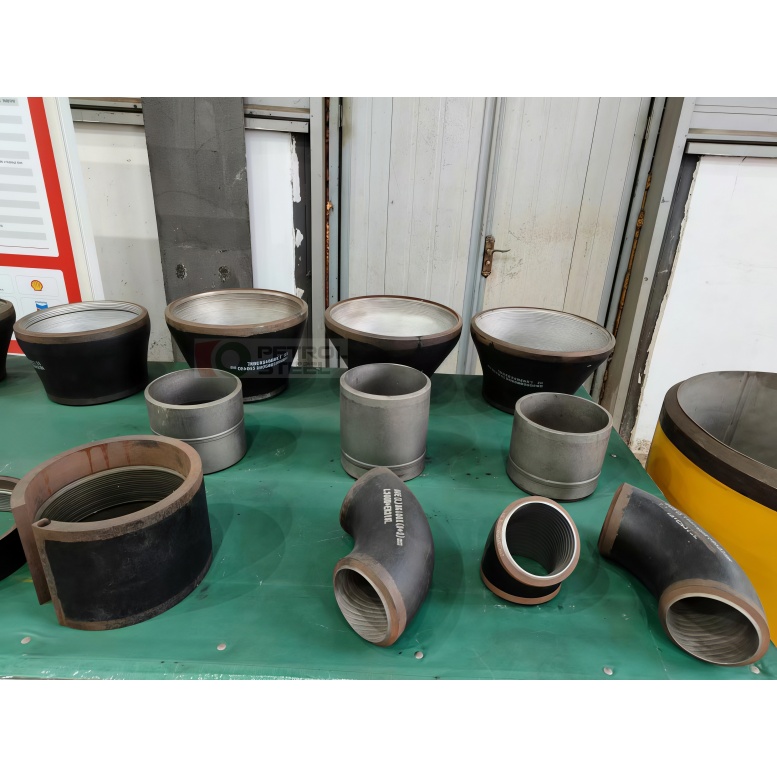
News & Insights | PETROL STEEL CO.,LTDAs offshore oil and gas development continues to move toward ultra-deepwater fields and increasingly aggressive sour environments containing elevated levels of H₂S, CO₂, and chlorides, Corrosion Resistant Alloy (CRA) clad pipeline systems have become a core structural requirement in global energy infrastructure. Within these systems, heavy-wall components such as Clad Bends play a critical role in maintaining flowline integrity under combined mechanical loading and corrosive exposure. In many integrated pipeline networks built around API 5LC Clad Pipe (https://www.petrolsteel.com/cra-clad-pipe-p.html), the performance of fittings such as Cladding Elbows and Cladding Flanges ultimately determines long-term system reliability. Traditionally, clad pipe production and bending operations were separated across multiple facilities. However, in modern high-spec subsea projects, this fragmented model introduces cumulative metallurgical uncertainty across welding, heat treatment, and forming stages. PETROL STEEL CO., LTD addresses these challenges through a fully integrated manufacturing approach that aligns cladding, forming, and final machining under a single metallurgical control framework.
1. Liquid Metal Embrittlement (LME) and Surface Micro-Crack Formation in Induction Bending
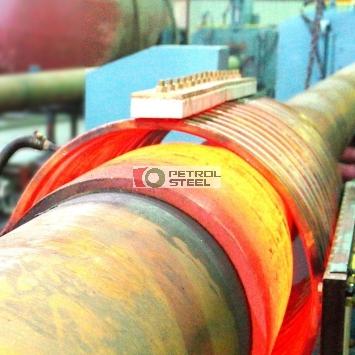
One of the most persistent failure mechanisms observed during third-party inspection of heavy-wall CRA bends is the appearance of fine surface micro-cracks along the extrados after bending and cooling. These defects are typically detected on components such as Clad Bends and downstream assemblies like Cladding Elbows during PT (Penetrant Testing) or final TPI walkthrough inspections. From a metallurgical standpoint, the root cause is associated with localized thermal instability during high-energy induction bending. When peak temperatures exceed the stability range of nickel-based overlay systems, trace elements such as Zn, Cu, and Pb may become mobile and interact with high tensile stress zones, initiating liquid metal embrittlement (LME). To mitigate this, PETROL STEEL (https://www.petrolsteel.com) applies a closed-loop thermal regulation system integrating multi-point infrared pyrometry and real-time feed control. This ensures a tightly controlled thermal window, significantly reducing localized overheating and maintaining structural stability across critical components such as API 5LC Clad Pipe systems.
2. Post-Bend Heat Treatment (PBHT) and TMCP Strength Stability
Post-Bend Heat Treatment remains a critical step in balancing corrosion resistance of CRA overlays with the mechanical integrity of high-strength backing steels. In conventional workflows, excessive thermal exposure during PBHT can degrade TMCP-processed steels, resulting in a measurable reduction in yield strength and toughness. This issue is particularly significant in heavy-wall systems designed for high-pressure service. PETROL STEEL implements a dual-stage precision thermal recovery process that stabilizes the microstructure of the base steel while preserving the solid-solution state of the CRA layer. This controlled approach ensures that mechanical properties remain within design specifications across complex geometries such as Clad Bends and Cladding Flanges. The same metallurgical stability principles are extended to upstream and downstream components, including API 5LC Clad Pipe and Cladding Elbows (https://www.petrolsteel.com/Cladding-Pipe-Fittings-p.html) used in subsea pipeline systems.
3. Iron Dilution Control at Clad-to-Base Transition Zones
Excessive iron dilution at bevel transition zones remains one of the most common causes of field rejection during PMI verification in offshore construction yards. This issue is particularly relevant in systems assembled from Clad Bends (https://www.petrolsteel.com/PESCO-Clad-Bends-p.html) and Cladding Elbows, where bevel reconstruction is required prior to field welding. The root cause is typically excessive heat input during conventional overlay welding, which causes partial melting of the carbon steel substrate and uncontrolled mixing with nickel-based filler materials. To address this, PETROL STEEL employs low-heat-input CMT (Cold Metal Transfer) welding technology, which significantly reduces thermal penetration and stabilizes the fusion boundary. This process ensures consistent dilution control across critical components including Cladding Flanges and integrated pipeline systems based on API 5LC Clad Pipe.
4. Dimensional Stability, Spring-Back Prediction, and Ovality Control
Dimensional deviation after bending remains a key engineering challenge in heavy-wall CRA systems, particularly in multi-layer structures where residual stress distribution is highly asymmetric. In field applications involving Clad Bends (https://www.petrolsteel.com/PESCO-Clad-Bends-p.html) and Cladding Elbows, uncontrolled spring-back can lead to ovality exceedance and installation misalignment, especially in subsea welding operations. PETROL STEEL addresses this through finite element–based stress modeling combined with predictive compensation algorithms that account for material-specific thermal and mechanical response. This allows precise geometric control across complex pipeline assemblies such as API 5LC Clad Pipe systems and associated components like Cladding Flanges (https://www.petrolsteel.com/PESCO-Cladding-Flanges-p.html), ensuring conformity to ASME B16.49 tolerances without field correction.
5. Interfacial Bond Integrity and Delamination Prevention
Interfacial disbonding between CRA overlay and carbon steel substrate represents one of the most critical long-term failure risks in sour service pipeline systems. This phenomenon is frequently evaluated during ultrasonic inspection of fabricated components such as Clad Bends and Cladding Elbows, where shear stress concentration can lead to progressive separation along the neutral axis. The root cause is typically insufficient fusion bonding during initial cladding operations or micro-defects introduced during welding. To ensure long-term structural integrity, PETROL STEEL enforces a strict metallurgical bonding verification protocol, including 100% ultrasonic inspection of incoming materials and minimum bond strength validation prior to forming. These controls are applied consistently across API 5LC Clad Pipe systems and downstream fabricated components such as Cladding Flanges, ensuring stable metallurgical continuity throughout the entire pipeline lifecycle.
Conclusion
As subsea pipeline projects continue to expand into deeper and more corrosive reservoirs, metallurgical control can no longer be treated as isolated process steps. A fully integrated manufacturing approach—covering cladding, forming, heat treatment, and final inspection—is now essential to ensure consistent performance across CRA pipeline systems. Through coordinated production of API 5LC Clad Pipe and precision-engineered components such as Clad Bends, Cladding Elbows, and Cladding Flanges, PETROL STEEL establishes a unified metallurgical control framework designed for next-generation offshore applications.
Frequently Asked Questions
Q1: Why does PETROL STEEL keep cladding and bending under one roof?
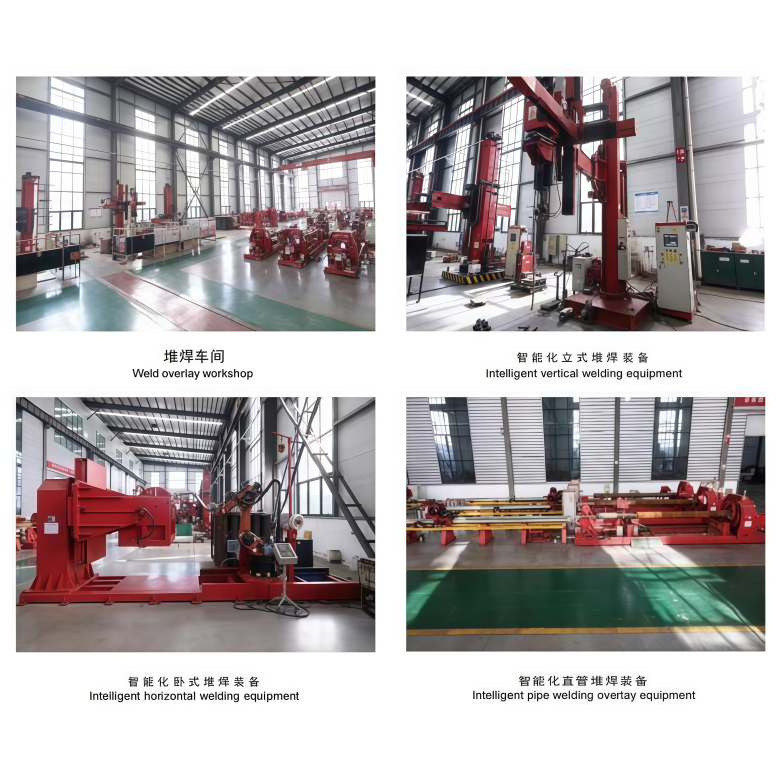
When you split cladding and bending between different shops, things can get messy if there’s a problem. If a bend cracks or fails an IGC test, the bender will point at the cladder, and the cladder will point back at the base pipe supplier. We avoid that by doing everything ourselves — from sourcing the base pipe and applying weld overlay cladding, through induction bending and post-bend heat treatment, right up to final machining. One team, one responsibility, and because we’re not constantly shipping parts back and forth, we can cut lead times by as much as 35%.
Q2: How does your intelligent cladding bending process stop Alloy 625 from sensitizing?
Sensitization is what happens when chromium carbides start forming along grain boundaries between about 600 and 800 °C. That pulls chromium out of the surrounding metal, leaving it wide open to intergranular corrosion. With intelligent cladding bending, we control the induction heating very precisely, then hit the part with high-pressure water quenching right away. The temperature drops so fast through that danger zone that the chromium stays exactly where it should — locked into solid solution.
Q3: Will your backing steel still meet NACE MR0175 / ISO 15156 hardness limits after processing?
Yes — for sour service, those specs require both the HAZ and base metal to stay at or below 22 HRC (248 HV10). We use a two-step tempering process after bending, which treats the steel evenly and breaks down any brittle martensite from quenching. This keeps hardness stable across the part, usually landing somewhere between 190 and 230 HV10.
Q4: What kind of NDT do you run to make sure nothing leaves the shop with defects?
We follow a strict inspection and test plan. Every piece gets full visual inspection, PT on the cladding surface and bevels, UT in line with ASTM A578 for delamination checks, and eddy current testing for surface flaws. On critical subsea jobs, we bring in automated ultrasonic testing for even deeper coverage.
Q5: How do you protect the bevels from corrosion during shipping?
Before anything leaves our plant, we degrease it thoroughly and coat it with a heavy-duty, peelable rust inhibitor. Then we fit custom-made, airtight rubber end caps that stand up to UV and handling. For international sea freight, each bend is packed in a made-to-measure, fumigated wooden crate lined with VCI film, so it won’t see a trace of salt air or take any knocks in transit.
ONE OF THE KIND, MILLIONS OF CHOICES
SUPERIOR QUALITY
PROMPT DELIVERY
FAVORABLE FEEDBACK
ALL AVAILABLE IN PESCO
SELECT PESCO, YOU WILL BE RIGHT
For more info and price of CRA CLAD Pipe and the specifications, please send us the inquiry, you will get the quick reply soon.
Headquater: A-4F, Vantone Center, A6, Chaowai St., Chaoyang Dist., Beijing, China.
Tel/Fax: +86 10 8599 9168
Whatsapp/Wechat: 0086 159 0035 7871
Email: sales@petrolsteel.com, jackywinn@foxmail.com
For more tehchnical information and available stocks or the customized types of superior CRA CLAD Pipes, Cladding Pipe Fittings and PESCO Cladding Flanges, please click the links:
https://www.petrolsteel.com/CRA-CLAD-Pipe-p.html
https://www.petrolsteel.com/PESCO-Clad-Bends-p.html
https://www.petrolsteel.com/Cladding-Pipe-Fittings-p.html
https://www.petrolsteel.com/PESCO-Cladding-Flanges-p.html
https://www.petrolsteel.com/Explosion-Welding-Pipe-p.html
Frequently Asked Questions
Why CRA CLAD Pipe Is Essential for LNG and Offshore Energy Projects
Top 5 Factors EPC Buyers Consider When Sourcing CRA CLAD Pipe
API 5LD CRA CLAD Pipe Procurement Guide for EPC Contractors
Alloy 625 CRA Clad Pipe for H₂S and CO₂ Corrosion Environments
Why EPC Contractors Choose CRA Clad Pipe Instead of Solid CRA Pipe for Corrosion-Critical Projects
How to Select the Right CRA Clad Pipe Material for Offshore Pipeline Projects
API 5LC CRA Clad Pipe vs Solid CRA Pipe: Cost and Performance Comparison
Corrosion-Resistant Alloy Clad Pipe Solutions for Refinery and Petrochemical Plants