English
 Chinese


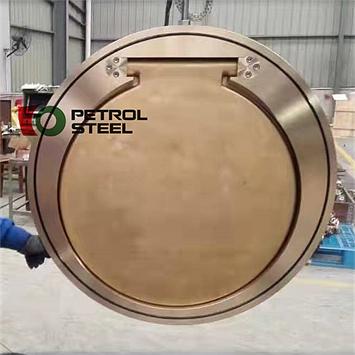
Corrosion-Resistant Alloy Clad Pipe Solutions for Refinery and Petrochemical Plants
Against the backdrop of global refinery capacity upgrades and the petrochemical industry's shift toward high-end chemicals, corrosion control strategies for integrated refining and petrochemical projects have evolved from "reactive maintenance" to "proactive design." Facilities such as high-temperature, high-pressure hydroprocessing units, sour water stripping units, and deep-sea oil pipelines face a triple threat: H₂S/CO₂ co-corrosion, chloride-induced stress cracking, and erosion-wear. While solid piping made of stainless steel or nickel-based alloys meets corrosion resistance requirements, material costs often exceed 40% of the total pipeline investment. To address this challenge, corrosion-resistant alloy (CRA) clad pipes—featuring a bimetallic design that combines a load-bearing carbon steel base with a protective CRA cladding—are becoming the preferred choice for new refining and petrochemical complexes in the Middle East, Southeast Asia, and coastal China. This solution enables EPC contractors to reduce overall pipeline costs by 35% to 60% while ensuring the operational longevity of the facilities.
Unlike standard single-layer pipes designed for a single performance objective, clad pipe solutions for refineries and petrochemical plants must address the diverse requirements of varying operating conditions. For instance, in the overhead condensation system of an atmospheric and vacuum distillation unit, the synergistic corrosion caused by HCl, H₂S, and H₂O can reach rates of several millimeters per year; in this scenario, selecting API 5LC clad pipe (API 5L X65 base material with Inconel 625 cladding) can extend the design service life from five years to over twenty. Meanwhile, for low-temperature ethylene storage and transport pipelines, clad pipe with 304L stainless steel cladding meets impact toughness requirements at -104°C while avoiding the risk of low-temperature brittle fracture associated with solid austenitic stainless steel. PESCO's technical team engages early in the project phase, formulating customized material selection plans based on process fluid composition, operating pressure and temperature profiles, and design standards (such as NACE MR0175/ISO 15156 and API 5LD), rather than simply recommending off-the-shelf products—a key criterion used by the world's top 20 EPC contractors when selecting clad pipe suppliers for refining and petrochemical projects.
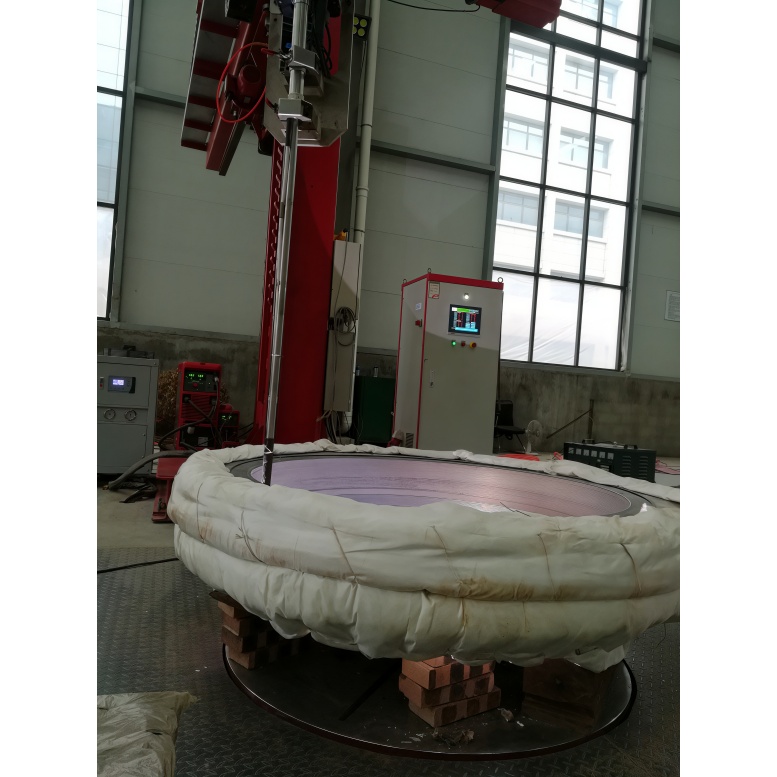
The stability of the manufacturing process directly determines the in-service reliability of clad pipes. Current mainstream processes—explosion welding, roll bonding, and automatic overlay welding—each have their specific application limits: explosion welding is better suited for large-diameter, thin-walled pipelines, ensuring cladding thickness uniformity with a deviation of ≤±0.2 mm; conversely, complex fittings such as elbows and tees rely on 8-axis coordinated hot-wire TIG overlay technology to keep the cladding dilution rate below 8% on complex internal surfaces, thereby preventing the risk of intergranular corrosion caused by compositional segregation. PESCO operates an independent, CNAS-certified testing center; every batch of clad pipes must pass 12 verification tests—including shear strength testing (≥210 MPa), ultrasonic testing (100% UT coverage), and pitting potential testing (ASTM G48)—with all data traceable to the raw material heat number, fully meeting the inspection requirements of international third-party agencies (SGS, BV, DNV). This comprehensive quality control system is the key to addressing the concerns of EPC purchasers regarding potential leaks and production shutdowns caused by cladding delamination.
A comprehensive refinery piping system requires not only straight pipe sections but also matching corrosion-resistant cladding elbows (https://www.petrolsteel.com/Cladding-Pipe-Fittings-p.html) to ensure holistic protection. Many projects have suffered from localized corrosion vulnerabilities caused by using composite pipe for straight sections while relying on standard alloys for fittings; examples include wall thinning on the outer arc of elbows due to fluid erosion and leakage at flange sealing faces caused by crevice corrosion—all classic cases of systemic failure. A robust solution should encompass a full range of components—such as Clad Bends (https://www.petrolsteel.com/PESCO-Clad-Bends-p.html), clad elbows, and clad flanges—utilizing identical cladding materials and welding processes to ensure consistent corrosion resistance across the entire pipeline. For instance, PESCO's Cladding Flanges (https://www.petrolsteel.com/PESCO-Cladding-Flanges-p.html) feature integrated cladding on both the sealing face and the inner diameter; compared to mechanically lined flanges, this design eliminates the risk of interface separation during thermal cycling, making them particularly suitable for applications involving cyclic loading, such as hydroprocessing reactor inlets/outlets and fluid catalytic cracking (FCC) units.
From the perspective of EPC project execution, the value of the API 5LC Clad Pipes (https://www.petrolsteel.com/cra-clad-pipe-p.html) solution also lies in delivery synergy. Refining and chemical projects typically involve the early arrival of long-lead equipment and the staggered delivery of piping materials; a supplier's ability to align with the dynamic requirements of the construction schedule directly impacts the project's commissioning timeline. PESCO maintains a dedicated EPC project coordination team at its Beijing headquarters, enabling the adjustment of production and shipping plans based on on-site prefabrication progress. Additionally, the company provides integrated packaging, labeling, and documentation (such as EN 10204 3.2 certificates and WPS/PQR records) for both fittings and straight pipe sections, thereby reducing the owner's workload regarding on-site inventory checks and acceptance. This "product-plus-service" integrated model has been successfully validated in an 8-million-ton-per-year refinery project in Southeast Asia: compared to the originally planned imported solid alloy solution, the clad pipe solution shortened the procurement cycle by 45 days, raised the on-site welding pass rate to 99.2%, and resulted in zero recorded instances of corrosion-related leakage during the 18 months following commissioning.
Organizations seeking further guidance on CRA composite pipe selection, corrosion-resistant material strategies, and integrated piping solutions can explore engineering resources and project support services at https://www.petrolsteel.com. In today's market, the most successful procurement decisions combine sound engineering judgment with strategic sourcing planning, ensuring both immediate project success and long-term operational reliability.
If you are advancing projects such as refinery revamps and expansions, ethylene cracking units, or LNG terminals, and require material selection quotes for composite piping tailored to specific operating conditions—along with pricing for third-party inspection—please visit https://www.petrolsteel.com or email sales@petrolsteel.com to submit your technical inquiry. Our engineers will respond within 24 hours, providing comprehensive technical support that spans material selection, process design, and logistics delivery. We aim to help you achieve operational excellence—characterized by safety, stability, longevity, full-capacity utilization, and superior performance—while effectively controlling total project investment.
ONE OF THE KIND, MILLIONS OF CHOICES
SUPERIOR QUALITY
PROMPT DELIVERY
FAVORABLE FEEDBACK
ALL AVAILABLE IN PESCO
SELECT PESCO, YOU WILL BE RIGHT
For more info and price of CRA CLAD Pipe and the specifications, please send us the inquiry, you will get the quick reply soon.
Headquater: A-4F, Vantone Center, A6, Chaowai St., Chaoyang Dist., Beijing, China.
Tel/Fax: +86 10 8599 9168
Whatsapp/Wechat: 0086 159 0035 7871
Email: sales@petrolsteel.com, jackywinn@foxmail.com
For more tehchnical information and available stocks or the customized types of superior CRA CLAD Pipes, Cladding Pipe Fittings and PESCO Cladding Flanges, please click the links:
https://www.petrolsteel.com/CRA-CLAD-Pipe-p.html
https://www.petrolsteel.com/PESCO-Clad-Bends-p.html
https://www.petrolsteel.com/Cladding-Pipe-Fittings-p.html
https://www.petrolsteel.com/PESCO-Cladding-Flanges-p.html
https://www.petrolsteel.com/Explosion-Welding-Pipe-p.html
Frequently Asked Questions
Why CRA CLAD Pipe Is Essential for LNG and Offshore Energy Projects
Top 5 Factors EPC Buyers Consider When Sourcing CRA CLAD Pipe
API 5LD CRA CLAD Pipe Procurement Guide for EPC Contractors
Alloy 625 CRA Clad Pipe for H₂S and CO₂ Corrosion Environments
Why EPC Contractors Choose CRA Clad Pipe Instead of Solid CRA Pipe for Corrosion-Critical Projects
How to Select the Right CRA Clad Pipe Material for Offshore Pipeline Projects
API 5LC CRA Clad Pipe vs Solid CRA Pipe: Cost and Performance Comparison
Related News