English
 Chinese


Why EPC Contractors Choose CRA Clad Pipe Instead of Solid CRA Pipe for Corrosion-Critical Projects
In the global trend of integrated refining, deep-sea oil and gas development, and LNG export terminal construction, one of the primary challenges faced by project owners and EPC contractors is how to balance the reliability and full lifecycle cost of pipeline systems in extreme corrosive environments. The high content of H₂S acidic gas fields, deep-sea chloride environments, and high-temperature and high-pressure hydrogenation units have almost stringent requirements for the corrosion resistance of pipeline materials. In this context, CRA composite pipes are gradually replacing traditional solid CRA CLAD Pipes and becoming the standard material selection for international clients such as Shell, BP, and Middle Eastern oil companies. For EPC procurement decision-makers, understanding the technical and economic logic behind this transformation is key to optimizing project cost structure and avoiding delivery risks.
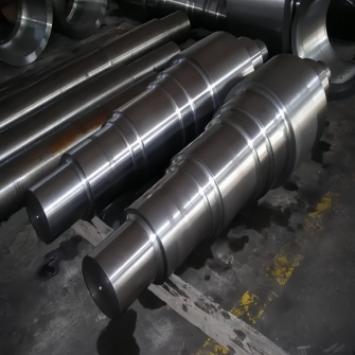
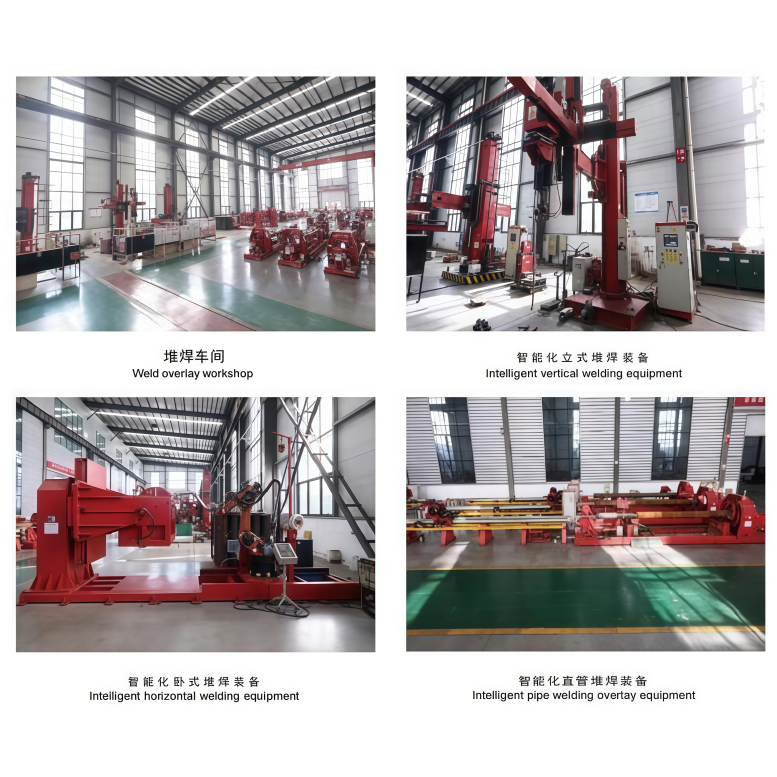
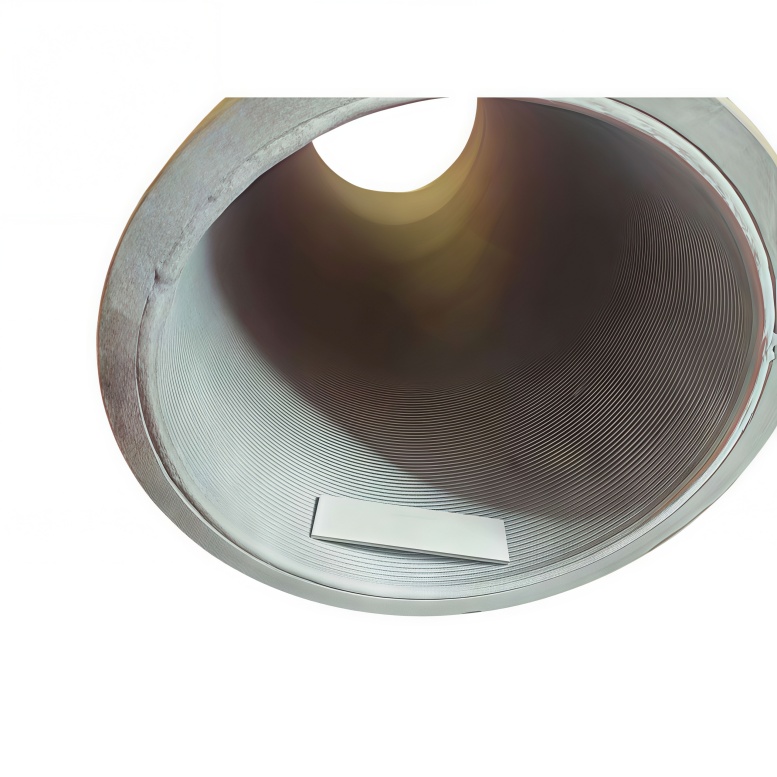
From the perspective of materials engineering, although solid CRA pipes have excellent corrosion resistance, their high material cost and complex processing technology limit their large-scale application. Taking Inconel 625 as an example, its market price is usually 8-10 times that of carbon steel of the same strength, and the difficulty of forging and heat treatment increases exponentially in thick walled and large-diameter specifications. In contrast, the API 5LC Claddiing Pipe adopts a bimetallic structure of "carbon steel base bearing+corrosion-resistant alloy coating protection", and only welds 3-5mm thick nickel based alloy on the inner surface in contact with corrosive media. This design reduces material costs by 40% -70% compared to solid pipes, while ensuring the structural stability of the coating under high pressure through metallurgical bonding. PESCO relies on advanced explosive composite and automatic welding processes to ensure that the bonding strength of each composite pipe far exceeds the requirements of API 5LD standard, perfectly solving the engineering paradox of "both strength and corrosion resistance".
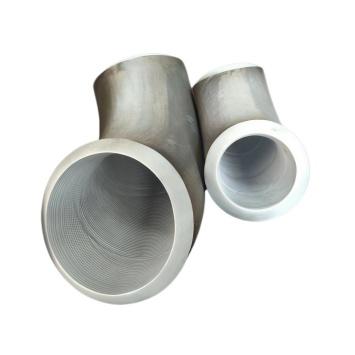
At the project execution level, the procurement cycle of solid CRA pipes is often a key bottleneck that restricts the EPC schedule. Due to limited global production capacity of nickel based alloys, the delivery time for large-diameter thick walled solid pipes is usually 6-9 months or more, and the price fluctuations are severe, which brings huge uncertainty to project budget control. CRA cladding pipes fully utilize the advantages of the mature carbon steel pipe supply chain, significantly shortening the delivery cycle. In addition, for stress concentration areas in pipeline systems, PESCO's specially developed overlay bending pipe Clad Bends achieves uniform coating distribution on vulnerable areas such as the outer arc side of the elbow through 8-axis linkage hot wire TIG overlay welding technology. This process flexibility enables EPC contractors to effectively compress procurement lead time while ensuring quality, ensuring that the project progresses according to milestone nodes.
The integrity of the pipeline system depends not only on the straight pipes, but also on the collaborative protection ability of the fittings and flanges. In deep-sea and acidic gas field projects, the flange sealing surface is the weakest corrosion link. Traditional solid CRA flanges are not only expensive, but also pose a risk of casting defects in the manufacturing of large-sized high-pressure flanges (Class 900 and above). PESCO's cladding flanges adopt the process of "forging steel substrate+sealing surface cladding", which not only retains the high-strength characteristics of carbon steel flanges, but also forms a dense corrosion-resistant barrier at the contact medium area. This solution completely eliminates the risk of coating peeling that may occur in mechanical lining flanges under high temperature and pressure, and is particularly suitable for working environments with limited space and difficult maintenance on offshore platforms.
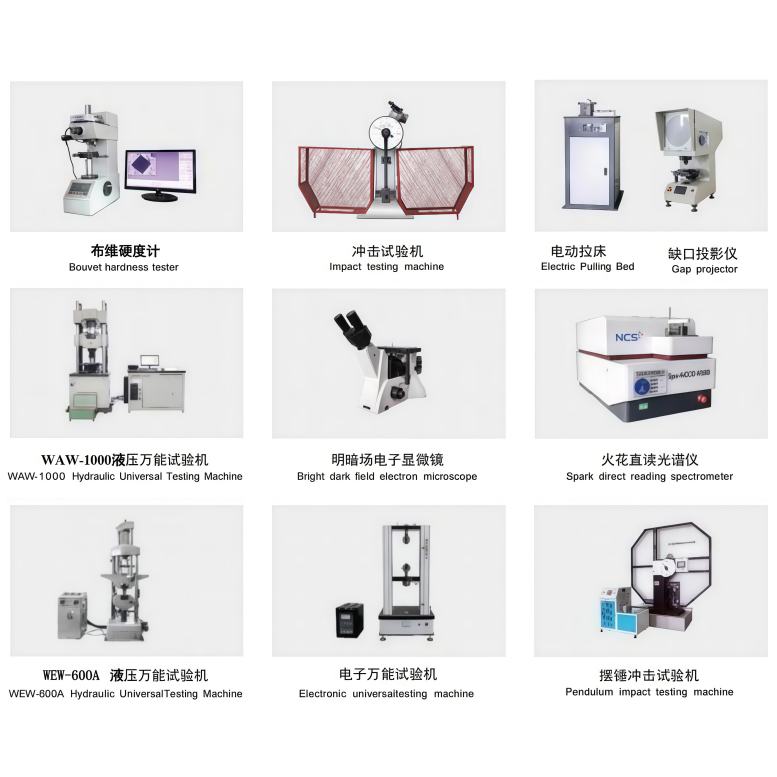
From the perspective of life cycle cost (LCC), the decision logic for choosing CRA composite pipes instead of solid pipes is clearer. Although the initial purchase price difference between the two is narrowing, there is a huge cost difference during the operation and maintenance phase. Once local corrosion occurs in solid pipes, it is usually necessary to replace the entire section, while composite pipes only require local repair of the damaged coating. The cladding elbows and matching fittings provided by PESCO have undergone strict -196 ℃ low-temperature impact and intergranular corrosion testing to ensure zero leakage operation within a 20-year design life. For EPC contractors, this means lower spare parts inventory pressure, less unplanned downtime, and higher owner satisfaction in the later stages of project operation and maintenance handover (LSTK).
With the implementation of the global carbon tariff policy in 2026, the carbon emission factor of pipeline materials has become an important scoring item for EPC bidding. CRA composite pipes significantly reduce the carbon footprint in the production process by reducing the use of precious metals. PESCO's technical team can assist clients in calculating the implied carbon emissions of materials and provide traceability documents that comply with EU CBAM regulations. If your refining expansion, deep-sea development, or LNG project is facing severe anti-corrosion challenges, please visit https://www.petrolsteel.com Obtain customized solutions. We will provide full process technical support based on specific operating parameters, from material selection calculations to welding process evaluation, to help you maximize economic benefits while ensuring the intrinsic safety of the project.
ONE OF THE KIND, MILLIONS OF CHOICES
SUPERIOR QUALITY
PROMPT DELIVERY
FAVORABLE FEEDBACK
ALL AVAILABLE IN PESCO
SELECT PESCO, YOU WILL BE RIGHT
For more info and price of CRA CLAD Pipe and the specifications, please send us the inquiry, you will get the quick reply soon.
Headquater: A-4F, Vantone Center, A6, Chaowai St., Chaoyang Dist., Beijing, China.
Tel/Fax: +86 10 8599 9168
Whatsapp/Wechat: 0086 159 0035 7871
Email: sales@petrolsteel.com, jackywinn@foxmail.com
For more tehchnical information and available stocks or the customized types of superior CRA CLAD Pipes, Cladding Pipe Fittings and PESCO Cladding Flanges, please click the links:
https://www.petrolsteel.com/CRA-CLAD-Pipe-p.html
https://www.petrolsteel.com/PESCO-Clad-Bends-p.html
https://www.petrolsteel.com/Cladding-Pipe-Fittings-p.html
https://www.petrolsteel.com/PESCO-Cladding-Flanges-p.html
https://www.petrolsteel.com/Explosion-Welding-Pipe-p.html
Frequently Asked Questions:
Alloy 625 CRA CLAD Pipe for H₂S and CO₂ Corrosion Environments
Corrosion-Resistant Alloy Clad Pipe Solutions for Refinery and Petrochemical Plants
Why CRA CLAD Pipe Is Essential for LNG and Offshore Energy ProjectsTop 5 Factors EPC Buyers Consider When Sourcing CRA Clad Pipe
API 5LD CRA Clad Pipe Procurement Guide for EPC Contractors
How to Select the Right CRA Clad Pipe Material for Offshore Pipeline Projects
API 5LC CRA Clad Pipe vs Solid CRA Pipe: Cost and Performance Comparison
Related News