English
 Chinese
Carbon Steel Butt Weld & Forged Fittings Manufacturer: A Technical Look at What Actually Determines Fitting Quality
Carbon Steel Butt Weld & Forged Fittings Manufacturer: A Technical Look at What Actually Determines Fitting Quality
Twenty-five years in this business have taught me that most buyers don't actually get burnt on the fitting they can see — they get burnt on the one line item hidden inside a mill certificate or a heat treatment log that nobody checked before the container left port. I spent the early part of my career on the inspection side, signing off on NDT reports and material certs before goods were released, and that background shapes how I still think about carbon steel pipe fittings today: not as a commodity you price per kilogram but as a set of manufacturing decisions – forming method, heat treatment, and hardness control – that either hold up in service or don't. This page isn't a sales pitch. It's a walkthrough of what we actually make, to what standard, and why that matters to whoever is signing off on your next purchase order.
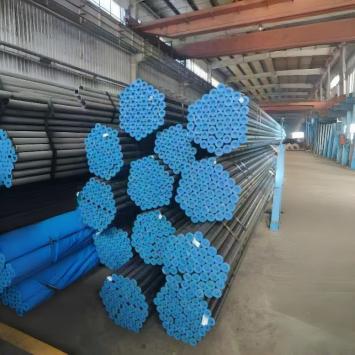
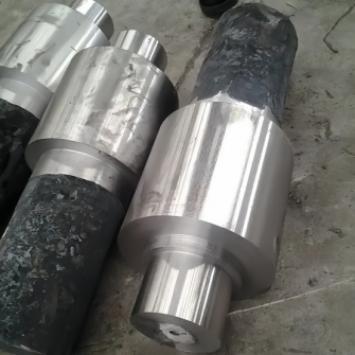
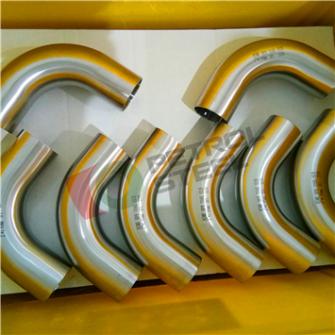
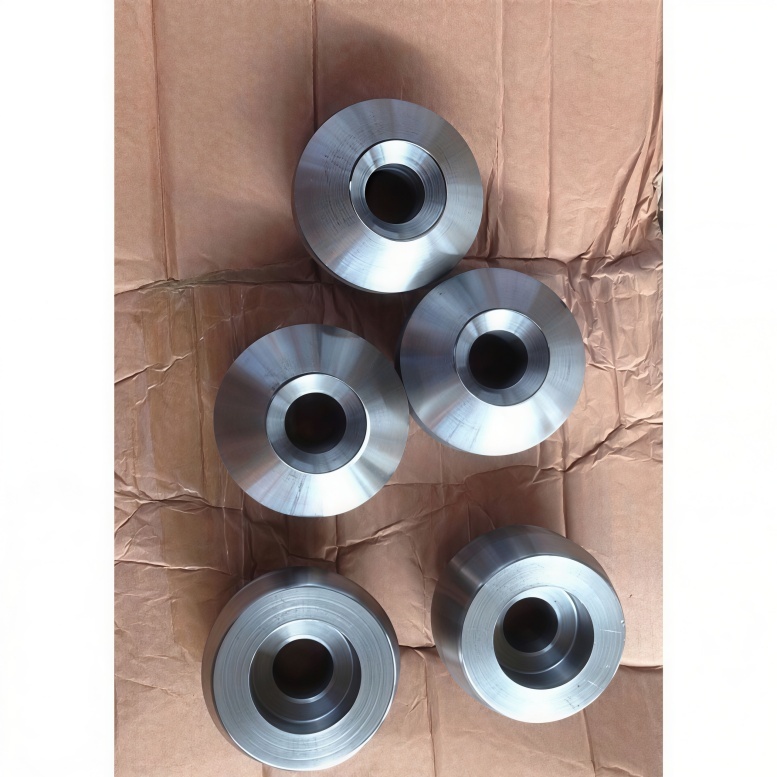
Our carbon steel fitting range splits into two families, and the distinction matters more to a piping engineer than it does to a general buyer. Butt weld fittings cover long and short radius 90° and 45° elbows, 180° return bends, equal and reducing tees, concentric and eccentric reducers, end caps, and transition pieces — the components that make up the bulk of a refinery or pipeline BOM. Forged fittings, connected by socket weld or NPT thread, cover elbows, tees, couplings, half couplings, plugs, and union fittings, alongside a full olet series — weldolets, threadolets, sockolets, and latrolets/sweepolets for branch connections. Buyers who lump these two families together in one RFQ often end up with mismatched lead times because seamless butt weld fittings are hot-formed or hydraulically pressed while forged fittings go through die forging and precision machining — different production lines, different tooling, and different bottlenecks.
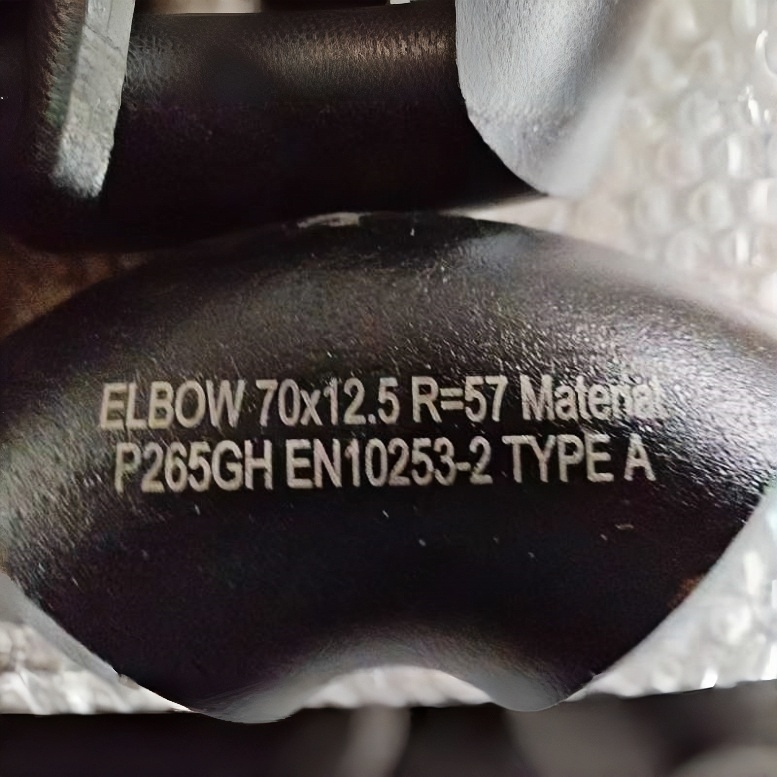
Material selection is where most disputes actually originate, so we treat it as an engineering conversation rather than a checkbox. Standard mid-to-high temperature service runs on ASTM A234 WPB or WPC. Low-temperature applications — LNG receiving terminal piping and cold climate pipeline sections — call for A420 WPL6, rated down to -46°C, and we don't substitute WPB into a WPL6 order just because the dimensions match; the Charpy impact requirements are not interchangeable. High-pressure, high-strength pipeline service is covered by A860 WPHY-42 through WPHY-70 in forged or press-formed construction. Forged fittings themselves are based on A105 for standard temperature service and A350 LF2 for low-temperature duty. For buyers working to Chinese national standards, we also produce fittings in 20# and Q235 per GB/T 12459 and GB/T 13401. And where a project specifies sour service, we run hardness control and HIC/SSCC testing against NACE MR0175 or MR0103 rather than treating those references as boilerplate on a datasheet — because a fitting that passes a standard hydrotest can still fail a sulphide stress cracking requirement if the hardness wasn't controlled during heat treatment.
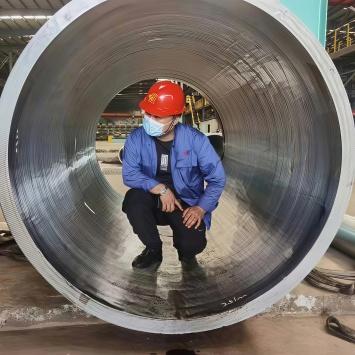
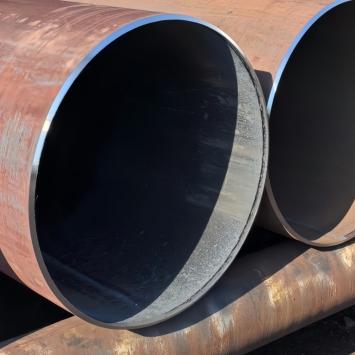
The dimensional range is broad enough to cover most piping packages without splitting an order across suppliers. Seamless butt weld fittings run ½" to 24" (DN15–DN600) as standard stock, with welded large-diameter fittings available up to 48" (DN1200) and beyond, and wall thickness from Sch5S through Sch160 and XXS. Forged fittings run ⅛" to 4" (DN6–DN100) in pressure classes 2000, 3000, 6000, and 9000 LB. We manufacture to ASME B16.9, B16.28, and B16.25 for butt-weld fittings and ASME B16.11 and MSS SP-97 for forged fittings and branch outlets, with parallel capability to DIN 2605/EN 10253 and GB/T 12459 for buyers whose projects specify European or Chinese design codes instead of ASME. If your project spec mixes standards – which happens more often than people expect on multinational EPC jobs – that's a conversation we can actually have in detail, not a generic "yes, we can do that" answer.
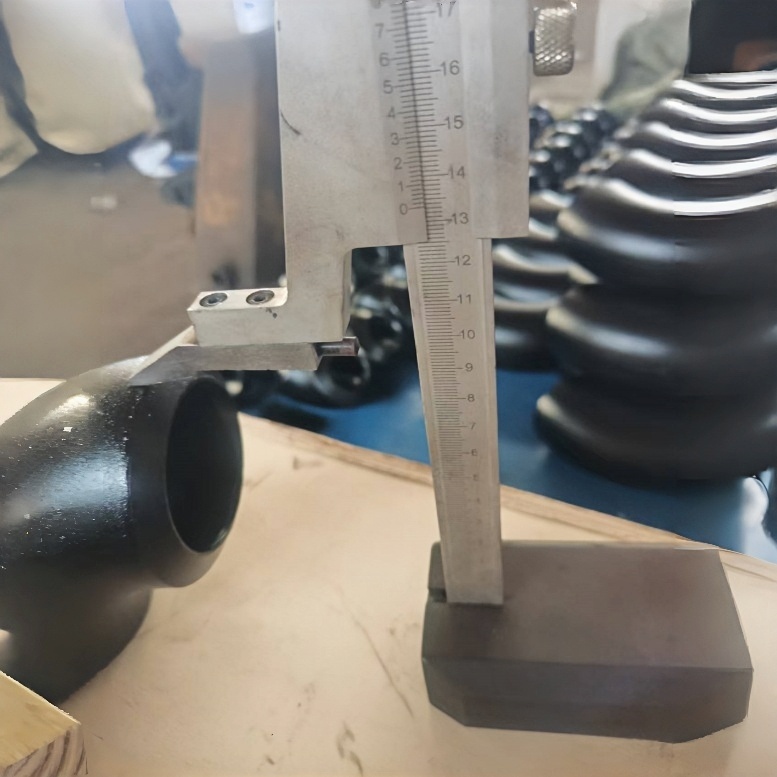
Quality control is the part of this process that determines whether a fitting survives fifteen years in a pipeline or fails a hydrotest on day one, so I'll walk through it plainly rather than listing certifications for effect. Every fitting goes through normalizing or annealing heat treatment appropriate to its grade, followed by surface treatment — shot blasting and either black paint, anti-rust oil, or hot-dip galvanizing depending on the buyer's storage and installation environment. On critical pressure-retaining components, we run 100% UT, RT, PT, or MT non-destructive testing as specified, and we issue EN 10204 3.1 or 3.2 material certificates tied to actual heat numbers — not a generic certificate printed against an average chemistry. For projects that require it, third-party witness inspection through BV, SGS, or TÜV can be arranged before the goods leave our facility so the buyer's own quality team, or their client's, has an independent sign-off rather than just our word on paper.
Where this actually gets tested is in service, and our fittings are running today in refinery process piping, offshore platform piping systems, the low-temperature sections of LNG receiving terminals — where WPL6 material is doing exactly the job it's rated for — power plant main steam and feedwater lines, and urban district heating networks. Those are not casual environments; a fitting that fails in an LNG cryogenic line or a high-pressure steam header doesn't just cost money; it creates a safety incident. I mention that not to be dramatic but because it's the actual standard we hold production to, independent of what any single buyer's spec sheet asks for.
If you're evaluating carbon steel fitting suppliers for an upcoming project, the conversation worth having isn't about unit price — it's about which standard applies to your service condition, what temperature and pressure class you're actually designing for, and whether the supplier can document that the fitting in your hands matches the heat number on its certificate. Send us your actual specification — grade, standard, size range, and application — and we'll respond with a technical answer, not a template quote. Twenty-five years of doing this the same disciplined way, across projects on five continents, is the only thing that actually earns a buyer's trust in a supplier they've never met in person.