English
 Chinese


Why EPC Contractors Are Increasingly Choosing CRA Clad Pipe for Offshore and Sour Service Pipeline Projects | PESCO
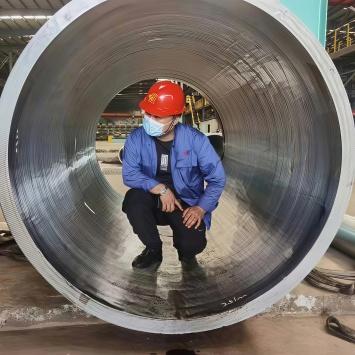
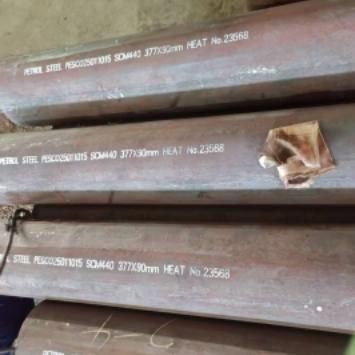
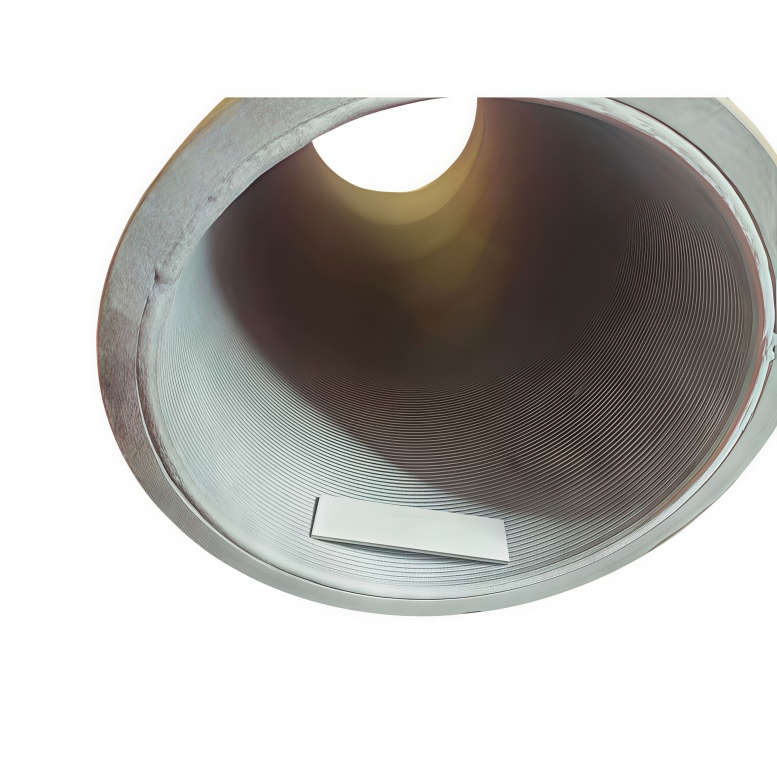
Against the backdrop of global oil and gas development extending to deep sea, ultra deep well, and high sulfur areas, the pipeline selection logic of EPC contractors has long surpassed a single "procurement cost" comparison and shifted towards full lifecycle reliability assessment. The limited space and extremely high maintenance costs of offshore platforms pose a risk of pitting corrosion, crevice corrosion, and sulfide stress cracking under acidic conditions (high H₂S, high CO₂, high Cl⁻), which can lead to unplanned shutdowns at any time - the operational cost of a single deep-sea repair often exceeds tens of millions of dollars. Stacked welded pipe under API 5LC standard API 5LC Clad Pipe ( https://www.petrolsteel.com/cra-clad-pipe-p.html ). It is an engineering grade solution designed to balance extreme environmental tolerance and investment return: it uses high-strength carbon steel/low-alloy steel as the structural layer, metallurgically combined with corrosion-resistant alloy lining, which not only meets the strength requirements of high-pressure transportation but also avoids the cost pain point of overall nickel based alloy pipelines, becoming the mainstream choice for pipeline systems in current Middle East, Southeast Asia, and North Sea projects.From a technical perspective, the core advantage of CRA CLAD Pipes lies in their "functional layered design". The outer layer of API 5L X65/X70 grade pipeline steel bears all circumferential stress and axial load, and the wall thickness can be flexibly adjusted according to the pressure level. The corrosion-resistant alloy layer (Inconel 625, Duplex 2205, Alloy 825, etc.) with an inner thickness of 3- 5 mm focuses on dielectric isolation. Compared to the overall CRA cladding pipe, this structure can reduce material costs by 40% -70%, while avoiding construction delays caused by the complex welding process of thick-walled overall alloy pipes. In the application of riser and subsea pipelines in deep-sea oil and gas fields, the weight advantage of composite pipes can directly reduce the load and installation costs of laying ships. For the EPC general contractor, this means achieving dual optimization of CAPEX and OPEX without sacrificing design safety factors.
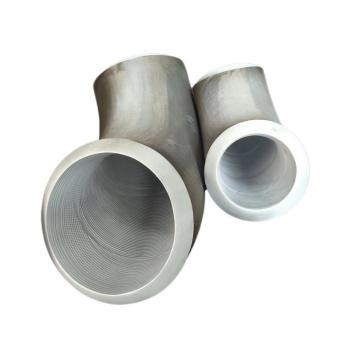
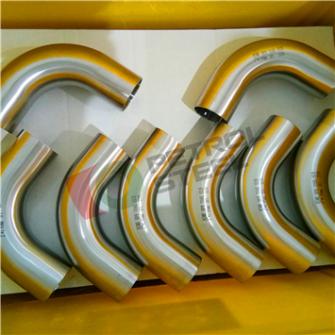
For the special challenges of offshore projects, the connection system of composite pipes also needs to be customized and matched. Traditional mechanical lining pipes are prone to lining delamination in thermal cycling and vibration environments, while clad bends ( https://www.petrolsteel.com/PESCO-Clad-Bends-p.html ), a welded bent pipe manufactured using fully automatic hot wire TIG welding technology. It can achieve consistent corrosion resistance between the inner wall of the bent pipe and the straight pipe section, and the bending radius can cover 3D-10D, meeting the requirements of compact layout of offshore platforms. PESCO's welded bent pipes have undergone low-temperature impact testing at -196 ℃ and SSC testing, fully meeting the acidic environment requirements of NACE MR0175/ISO 15156. They have been successfully applied in multiple development projects with water depths exceeding 500 meters, solving the problem of local corrosion and leakage caused by the detachment of traditional elbow liners.
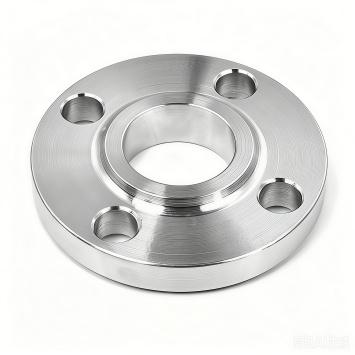
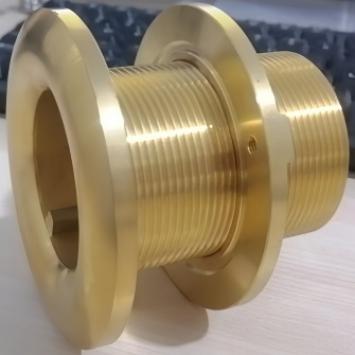
As a weak link in the pipeline system, the corrosion protection of the sealing surface and inner diameter area of the flange is equally critical. Although ordinary integral CRA clad flanges ( https://www.petrolsteel.com/PESCO-Cladding-Flanges-p.html ) have reliable performance, the delivery cycle and cost of large-diameter and high-pressure products are long. Welding Flanges with Forging Matrix and Automatic Welding Process for Welding Flanges. It can form a uniform and dense corrosion-resistant layer on various sealing surfaces such as RF, RTJ, FF, and supports the full range of ASME B16.5, B16.47, and API 6A standards. The interface strength of its metallurgical bonding exceeds 450MPa, avoiding the risk of interface failure of loose lining flanges under thermal expansion and contraction, especially suitable for frequent start-stop conditions of offshore wellheads and processing modules. For EPC procurement, this type of product can also achieve batch consistency control with composite pipes and welded fittings, reducing the coordination cost of third-party inspection.
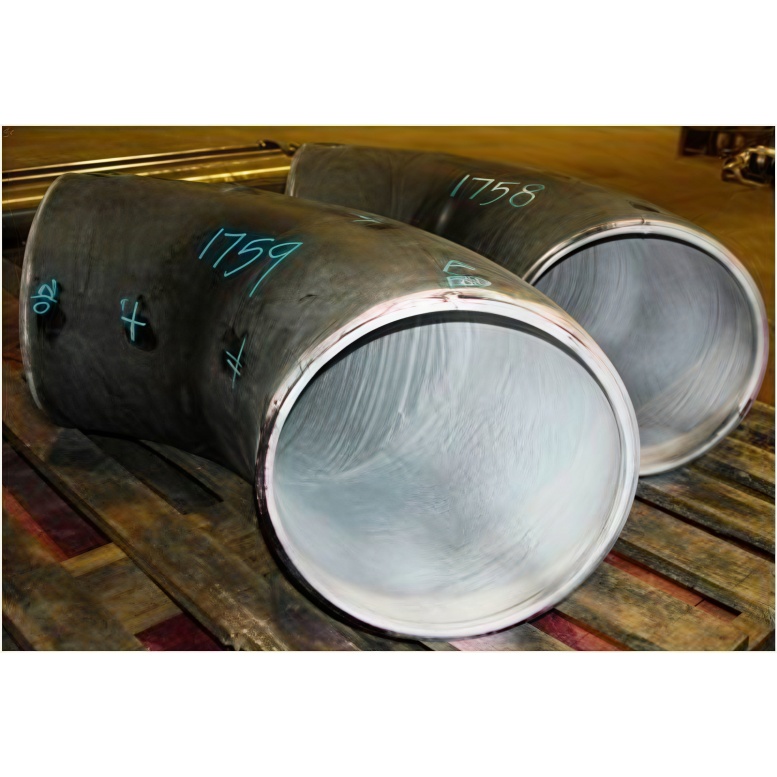
At the level of pipe fittings matching, welding elbows, Cladding Elbows ( https://www.petrolsteel.com/Cladding-Pipe-Fittings-p.html ). The components such as tees, reducers, and pipe caps also use the same welding process and material system as the main pipeline. This not only ensures uniform corrosion allowance for the entire pipeline system, but also simplifies on-site welding process evaluation - the welding materials and parameters of all welded fittings can be consistent with the main pipeline, greatly reducing the workload of the construction party's trial welding and certification. For offshore projects with tight schedules, this "systematic supply+standardized process" model is often more effective in ensuring controllable progress than decentralized procurement of products from different suppliers.
From a full lifecycle perspective, the maximum benefit of choosing API 5LC CRA composite pipes comes from cost reduction during the operation and maintenance phase. In a case study of an acidic gas field in the Middle East, the original design used a carbon steel+corrosion inhibitor scheme that required full line testing and partial replacement every 3 years. However, after switching to composite pipes, the design life was directly increased to over 25 years without the need for continuous injection of corrosion inhibitors. Converted based on annual gas production, the benefits of reducing maintenance downtime for a single well have exceeded the incremental cost of initial pipeline investment. This is also the core reason why more and more international oil companies explicitly require the use of CRA composite pipes as a priority for critical corrosion sections in their latest EPC bidding technical specifications.
ONE OF THE KIND, MILLIONS OF CHOICES
SUPERIOR QUALITY
PROMPT DELIVERY
FAVORABLE FEEDBACK
ALL AVAILABLE IN PESCO
SELECT PESCO, YOU WILL BE RIGHT
For more info and price of CRA CLAD Pipe and the specifications, please send us the inquiry, you will get the quick reply soon.
Headquater: A-4F, Vantone Center, A6, Chaowai St., Chaoyang Dist., Beijing, China.
Tel/Fax: +86 10 8599 9168
Whatsapp/Wechat: 0086 159 0035 7871
Email: sales@petrolsteel.com, jackywinn@foxmail.com
For more tehchnical information and available stocks or the customized types of superior CRA CLAD Pipes, Cladding Pipe Fittings and PESCO Cladding Flanges, please click the links:
https://www.petrolsteel.com/CRA-CLAD-Pipe-p.html
https://www.petrolsteel.com/PESCO-Clad-Bends-p.html
https://www.petrolsteel.com/Cladding-Pipe-Fittings-p.html
https://www.petrolsteel.com/PESCO-Cladding-Flanges-p.html
https://www.petrolsteel.com/Explosion-Welding-Pipe-p.html
Frequently Asked Questions:
How to Select the Right CRA CLAD Pipe Material for Offshore Pipeline Projects
Why EPC Contractors Choose CRA CLAD Pipe Instead of Solid CRA Pipe for Corrosion-Critical Projects
Alloy 625 CRA Clad Pipe for H₂S and CO₂ Corrosion Environments
Corrosion-Resistant Alloy Clad Pipe Solutions for Refinery and Petrochemical Plants
Why CRA Clad Pipe Is Essential for LNG and Offshore Energy ProjectsTop 5 Factors EPC Buyers Consider When Sourcing CRA Clad Pipe
API 5LD CRA Clad Pipe Procurement Guide for EPC Contractors
API 5LC CRA Clad Pipe vs Solid CRA Pipe: Cost and Performance Comparison