English
 Chinese
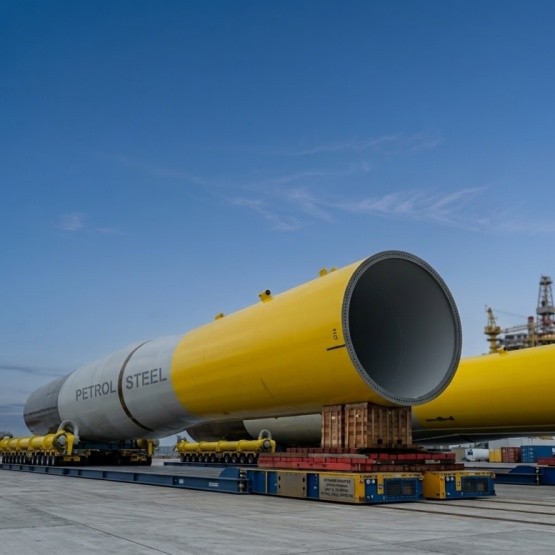
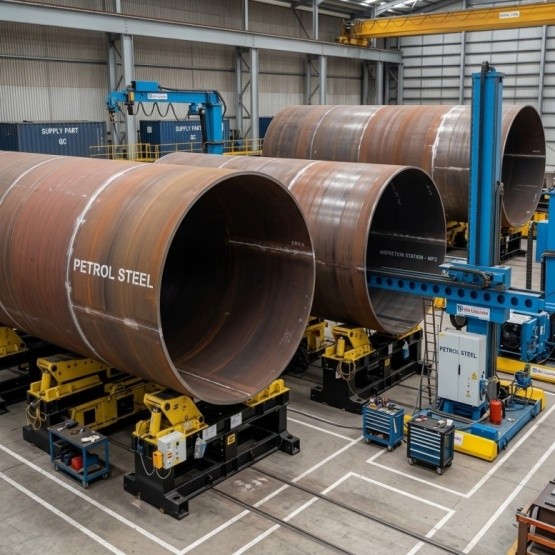
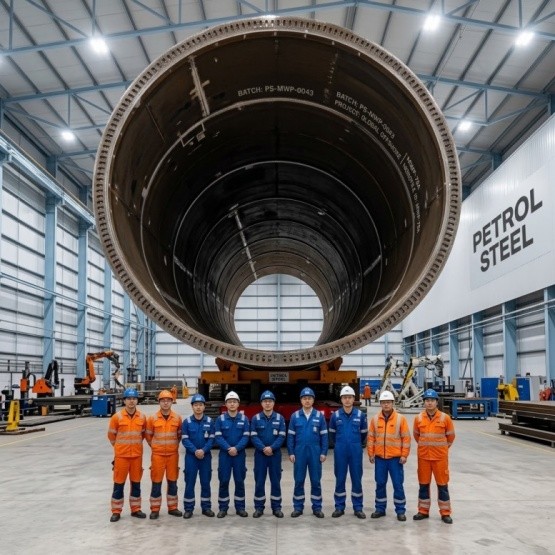
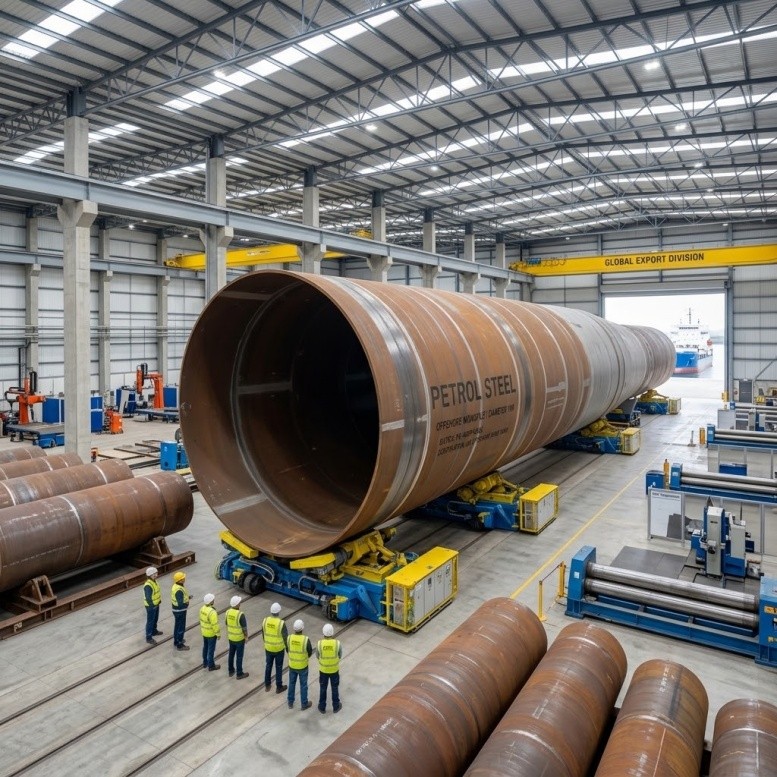
PETROL STEEL CO., LTD. supplies offshore wind & platform monopiles for offshore wind farms, oil & gas platforms, marine energy infrastructure, and other large-scale offshore EPC projects. These large-diameter steel foundation structures are designed to transfer large vertical, lateral, and cyclic loads to the seabed and provide a stable foundation for offshore wind turbines or fixed offshore structures. But for an EPC contractor, a monopile is much more than a big steel pipe. Diameter, wall thickness, steel grade, weld quality, dimensional accuracy, pile length, coating system, lifting arrangements, transportation, and inspection documentation should be considered together. From the project perspective, PETROL STEEL approaches monopile supply by coordinating technical requirements, manufacturing, quality control, third-party inspection, and international logistics in line with the approved project specification.
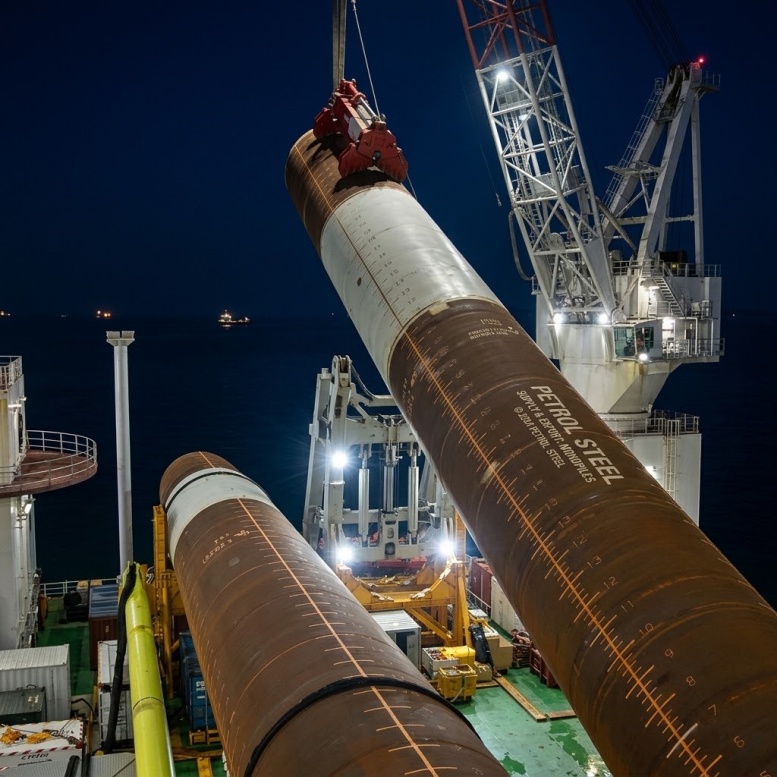
Monopiles are large-diameter steel tubes that are driven directly into the seabed, generally with hydraulic or impact pile driving equipment. In fixed-bottom offshore wind projects, the monopile transfers wind, wave, current, and operational loads into the seabed and supports the transition piece and tower. The same principle of large-diameter tubular foundation can also be applied to some offshore platform and marine structural projects where the engineering design requires driven tubular piles. With offshore wind turbines becoming more powerful, so too are the requirements for foundation dimensions and fabrication. By the end of 2025, the global offshore wind capacity stood at 92.5 GW, with more than 9 GW of new offshore wind capacity grid-connected in 2025. Monopiles remain a key foundation technology, especially for fixed-bottom developments. Therefore, PETROL STEEL concentrates its supply capacity on large-diameter, heavy-wall, project-specific steel monopiles rather than treating the product as a traditional pipe commodity.
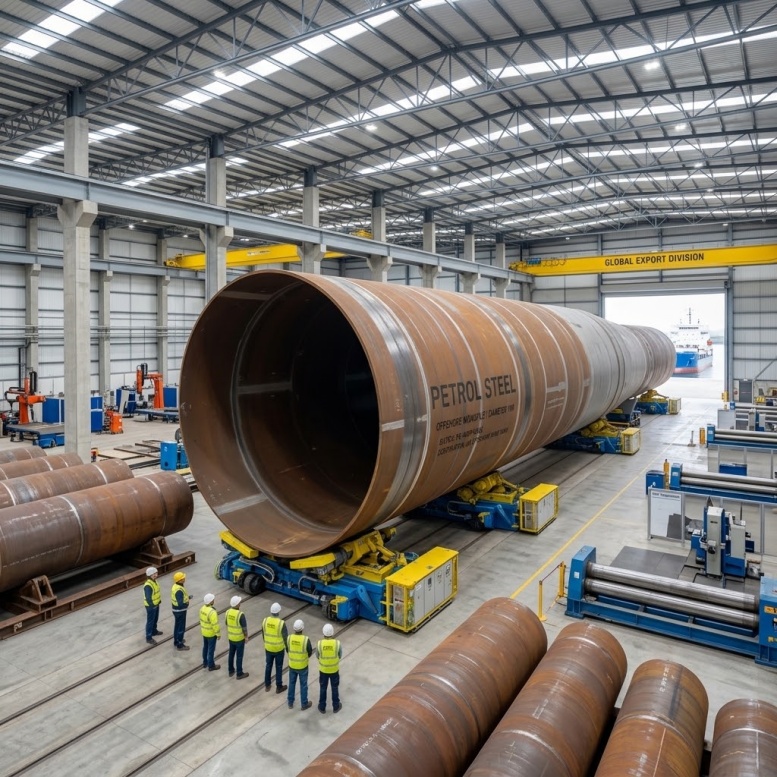
Offshore wind monopiles are typically in the range of about 5 to 11 meters in outside diameter, but larger diameters are being developed for next-generation projects. Depending on water depth, soil conditions, turbine loads, and project design, pile lengths can be up to approximately 60–120 meters or more, and wall thicknesses can commonly be between 60 and 150 mm. Individual monopiles can weigh hundreds of tons or more than 2,000 tons, depending on the final engineering configuration. These are indicative figures and not fixed product limits. The structural design, geotechnical conditions, installation methodology and project specification will determine the actual dimensions. Typical grades of structural steel are S355, S420 and S460. The final grade, toughness requirements, welding consumables, coating system and fabrication tolerances are determined by the approved design. PETROL STEEL can manufacture to drawings, fabrication specifications, material requisitions, inspection and test plans, welding requirements, and quality documentation specific to the project.
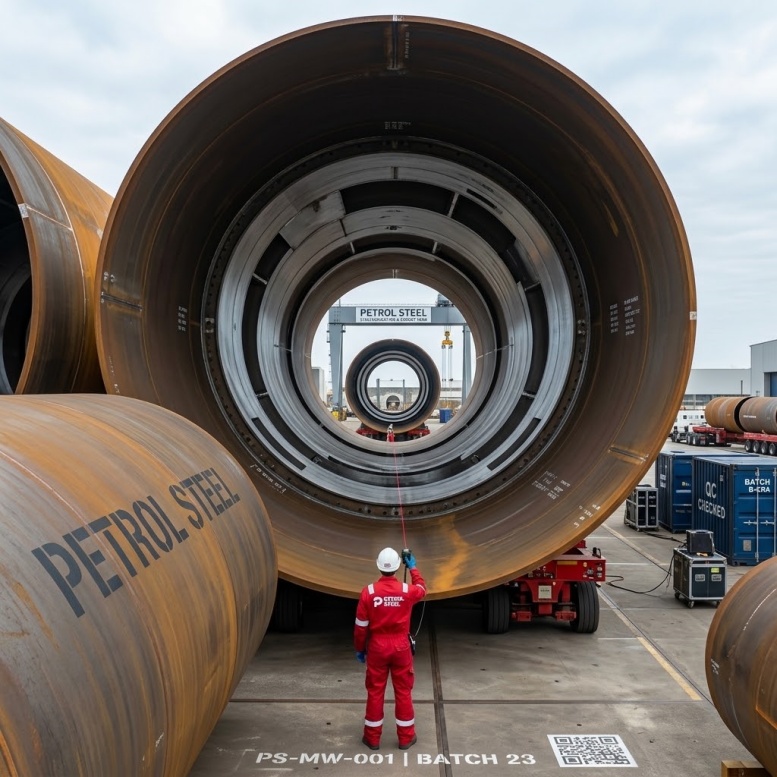
The manufacturing of large monopiles requires a fabrication process that can control the heavy steel plates, the longitudinal and circumferential welds, the roundness, the straightness, the dimensional tolerances and the local geometry throughout the whole manufacturing sequence. Manufacturing may include steel plate cutting, forming, rolling, longitudinal seam welding, circumferential welding, section assembly, connection of flange or transition-piece, dimensional inspection, blasting and coating according to the design. Fabrication control is particularly important for large offshore foundations where accumulated deviations over a number of cans or sections can affect the final alignment and installation. PETROL STEEL will schedule a technical review with experienced manufacturing teams and will work from approved drawings, welding procedures, inspection plans, and applicable project standards. The objective is not only to produce a large steel cylinder but also a base component that can be shipped, handled, installed, and accepted to the EPC contractor’s specifications.
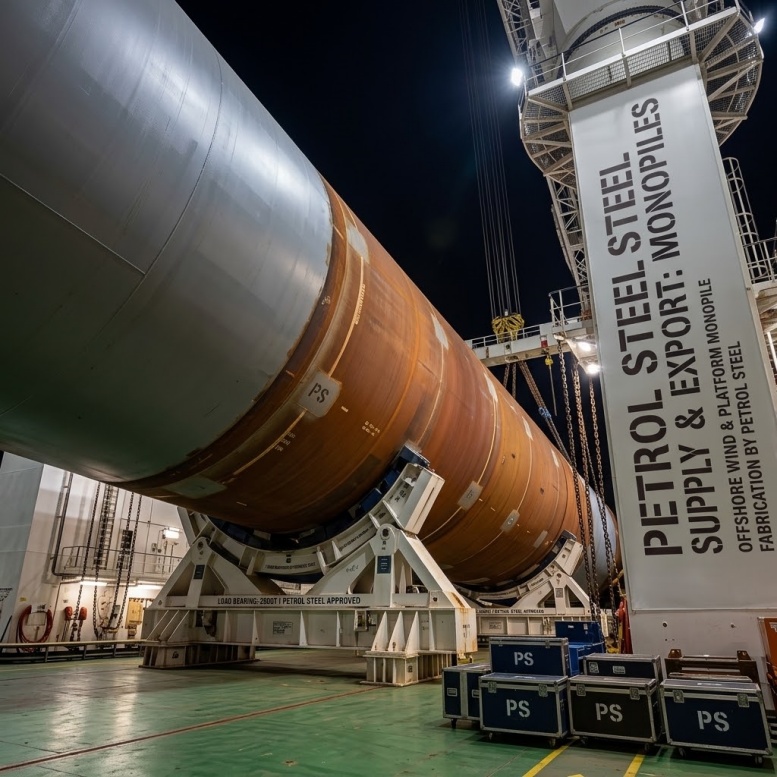
International standards, project specifications, and owner requirements are usually combined to design offshore monopiles. Depending on the project, applicable requirements can include EN 10225, EN 10025, EN 1090, DNV standards and project-specific offshore structural specifications, and relevant welding, NDT, coating and material requirements. The steel grade selected may be S355, S420, S460 or another approved structural grade, with impact toughness and through-thickness properties specified where required. Inspection may include visual examination, dimensional inspection, ultrasonic testing, radiographic testing where specified, magnetic particle or penetrant testing, weld inspection, coating inspection and other examinations as defined in the approved ITP. Corrosion protection may include a specified marine coating system and cathodic protection by sacrificial anodes or impressed current cathodic protection as determined by the project design. Quality documentation may include MTC’s, EN 10204 3.1 or 3.2 certificates where required, welding documentation, NDT reports, dimensional inspection records, coating reports, and final manufacturing dossiers. A third-party inspection was arranged as per the contract and the requirements of the purchaser.
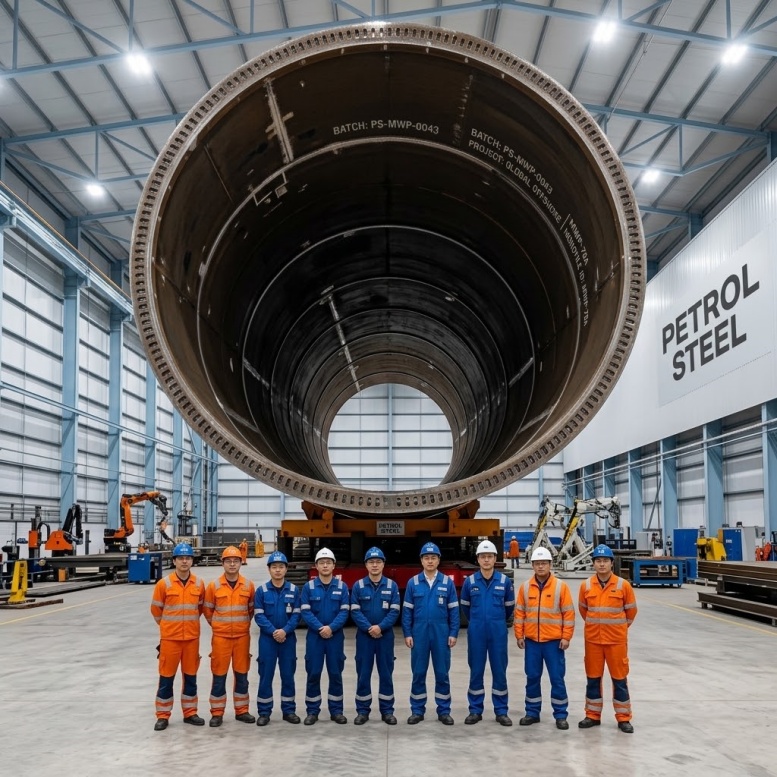
For large offshore foundations, quality assurance cannot wait for the final inspection. The working principle of PETROL STEEL is that all offshore wind & platform monopiles supplied to a project shall be subjected to internal QC inspection and, where required, independent third-party inspection, and inspection points shall be set throughout the manufacturing process. Our technical team has over 20 years' experience in the industry; our international trade and project marketing team has over 20 years' experience; our quality inspection personnel have an average of more than 15 years' experience; and our logistics team has an average of more than 20 years' experience in international cargo coordination. PETROL STEEL has been exporting offshore wind and platform monopiles for over 10 years now. The products and services have maintained a zero-claim record for the projects in this supply scope on the basis of our supplied project records. This is reflected in our behavior in respect of technical clarifications, inspection coordination, documentation, packing, shipment, and after-sales communication rather than in general claims like “best quality” or “zero risk”.
Standard project orders typically have a production lead time of approximately 8-10 weeks depending on final drawings, material availability, production sequence, inspection requirements, coating system, quantity, and project schedule. “Monopiles are oversized and heavy cargo, and therefore transportation planning has to be taken into consideration from the very beginning of the project. PETROL STEEL can arrange export packing and marine transportation requirements according to the agreed delivery basis, destination port, lifting arrangements and cargo dimensions. Customers are welcome to submit drawings, technical specifications, BOMs, material requirements, inspection plans or existing monopile procurement specifications for review prior to quoting. We can coordinate manufacturing schedule, QC inspection, third-party inspection, documentation compilation and export logistics through one commercial contact point. This approach simplifies coordination for EPC contractors and developers, eliminating the need to work separately with steel fabrication, inspection, and international logistics providers.
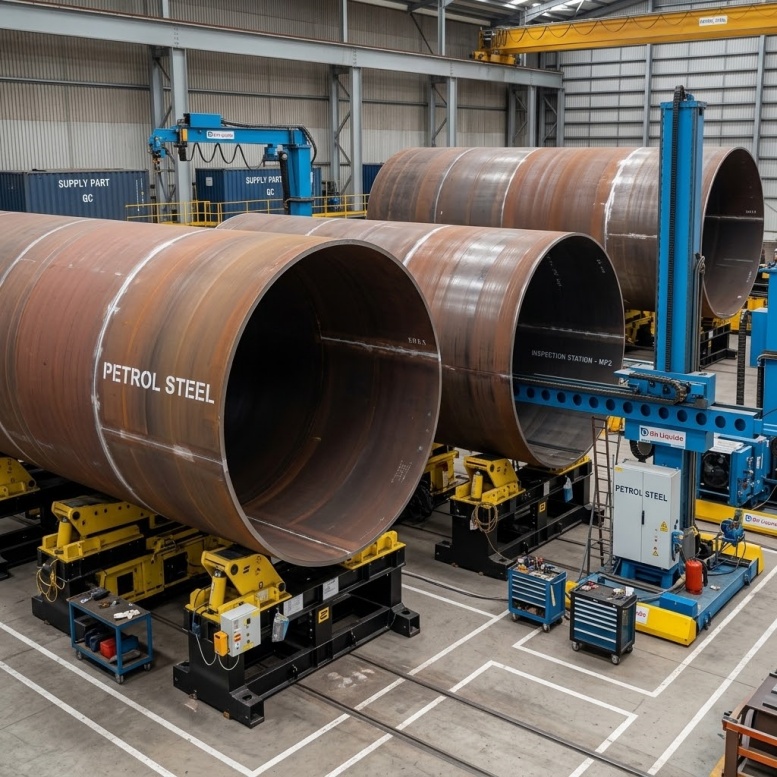
The offshore foundation market is getting more competitive with growing European fabrication capacity and Chinese manufacturers taking a larger role in international projects. At the same time, the demand for larger and heavier foundations from next-generation offshore wind turbines is increasing the significance of fabrication capability, engineering coordination, quality assurance, and logistics execution. PETROL STEEL’s mission is to bridge the gap between qualified manufacturing capability and international EPC procurement requirements while maintaining the technical discipline expected in offshore steel structures. We also have a wider product portfolio that covers steel pipes, CRA clad piping, fittings, flanges, valves, prefabricated piping, and other equipment related to oil & gas and energy infrastructure. Offshore wind and platform monopiles, therefore, are a good match with our existing offshore and energy supply capabilities without changing our core identity as a supplier of piping and energy equipment to the oil & gas industry. PETROL STEEL offers offshore wind developers, EPC contractors, offshore construction companies, oil & gas operators and international procurement teams a practical route from technical RFQ to inspected, documented and export-ready monopile supply.