English
 Chinese
API 5L Pipeline Bends: Critical Inspection Checklist for EPC Contractors | PETROL STEEL
API 5L Pipeline Bends: Key Inspection Requirements for EPC Contractors
I have been in this industry for 19 years, and I have seen many EPC projects fail on API 5L pipe bends. Some bends had ovality in excess of limits that prevented weld alignment; others failed low-temperature impact tests and cracked on pressure testing. Last year, a subcontractor on a long-distance natural gas project in Central Asia tried to cut costs by ordering non-standard bends. The result? Three Φ813 mm bends cracked at -20°C. The entire pipeline section had to be taken offline and reworked, and the breach-of-contract penalties alone exceeded $800,000. As Technical Manager at PETROL STEEL, I want to walk you thru some crucial inspection requirements for API 5L pipe bends to help you avoid some common pitfalls in EPC procurement.
Material traceability is key to the quality of API 5L pipe bends. The API 5L standard specifies very different requirements for the chemical composition and mechanical properties of the grade pipes PSL1 and PSL2. For high-grade PSL2 bends (e.g., X65 and X70), the raw material melt analysis report shall be verified: Carbon Equivalent (CEV) shall be kept below 0.42% to avoid cold cracking during welding; sulfur and phosphorus contents shall not exceed 0.015% and 0.025%, respectively, to avoid low-temperature brittleness. Our API 5L pipe bends are supplied with a steel mill test certificate for each batch and re-inspected by a third-party inspection company. For example, for X70 bends, the Charpy impact energy at -20°C must be ≥40 J, which is 25% higher than the standard requirement of 32 J, to ensure reliability in extreme cold. One Russian customer came specially for sampling – and when he saw the test data, he signed a purchase contract for 200 tons on the spot.
The quality of the formed pipe bends depends directly on accurate control of the process parameters. API 5L pipe bends are normally manufactured by medium-frequency induction heating and the push-bending process. The heating temperature must be strictly controlled between 850 and 950°C. If the temperature is too low, the pipe will not have enough plasticity and is likely to crack during bending; if it is too high, grain coarsening will occur, leading to reduced mechanical properties. The production line is equipped with infrared pyrometers and PLC control systems, which can adjust the heating power and pushing speed in real time. For example, when we bend X70 pipes with an outer diameter of 1016 mm and a wall thickness of 26.2 mm, we use a constant pushing speed of 110 mm/min and a radius of 6D, and the wall thickness reduction is only 9.8%, which is far less than the maximum wall thickness reduction of 12% specified by the API 5L standard. Control of ovality uses mold calibration and online monitoring to keep the ovality of 1219 mm bends within 0.8%, which is stricter than the 1% requirement of the national standards, so weld misalignment during on-site installation is no more than 0.5 mm, and welding defects are minimized.
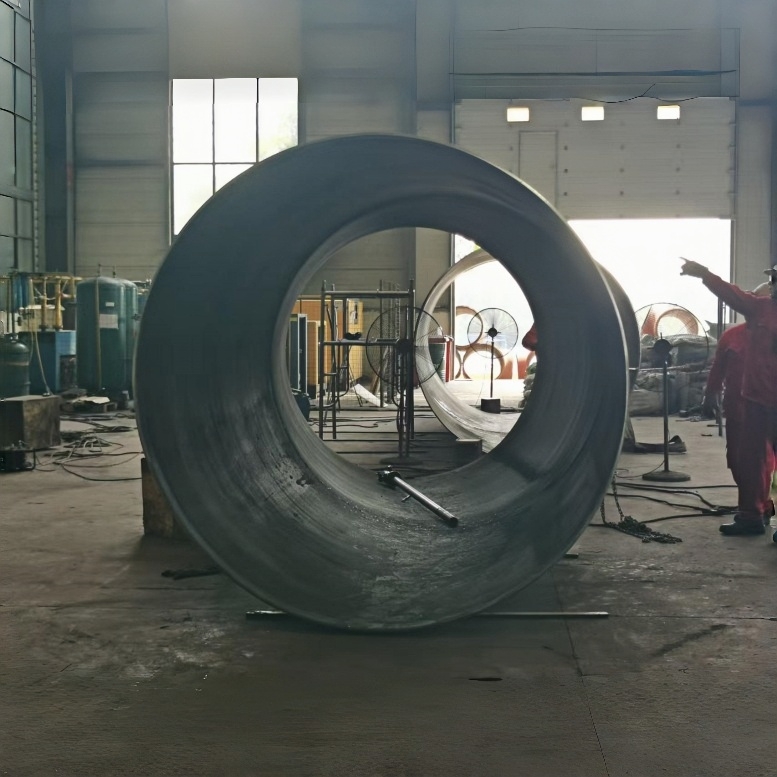
Potential hazard identification is an important tool, and EPC projects are a major application of non-destructive testing (NDT). The API 5L standard requires 100% ultrasonic and magnetic particle testing on bends, and we have added penetrant testing on the bevel ends. The transition zone between bent and straight sections is a stress concentration area where micro-cracks can start. By adopting Phased Array Ultrasonic Testing (PAUT) instead of conventional ultrasonic testing, we have improved the detection sensitivity from a 2 mm flat-bottom hole equivalent to a 1 mm equivalent, making it possible to detect much finer defects. In a Southeast Asian cross-sea gas transmission project last year, PAUT found a 0.3 mm micro-crack in the transition zone of a 720 mm bend. We scrapped and remanufactured the unit immediately, avoiding a major safety risk during offshore installation. All inspection reports are uploaded to the cloud and can be viewed by the EPC project team thru scanning QR codes, fully meeting the project traceability requirement.
The efficiency of on-site installation depends directly on anti-corrosion treatment and dimensional accuracy inspection. The length deviation of API 5L pipe bends shall be controlled within ±1.5 mm/m; the end face perpendicularity shall be controlled within 0.5°. OthERWise, pipeline fit-up will be difficult. Inspection is carried out by laser diameter gages and 3D coordinate measuring machines; for example, for 12 m long Φ2540 mm bends made for a domestic water diversion project, the overall straightness deviation was only 3 mm, allowing perfect positioning to be achieved on the first attempt. For anti-corrosion, bends for water transport projects are covered with a coal tar epoxy coating with cathodic protection of 800 μm thickness. Bends for oil and gas pipelines are coated with 3PE coating, which has a peel strength of at least 100 N/cm, can detect holidays at 25 kV, and provides a service life of 30 years. One of our customers in the Middle East told us they had a 100% coating integrity rate on our bends after on-site welding, up 15 percentage points from their previous suppliers.
From a marketing perspective, we market our inspection requirements as a “risk assurance solution” to EPC clients. For example, at the bidding stage, we offer a detailed “API 5L Pipe Bend Quality Plan” with 18 items, including re-checking of raw materials, qualifying procedures, testing standards, etc., to help get our quality control system approved early by project owners and supervisors. We provide a full set of traceability documents (material certificates, inspection reports, heat treatment curves) upon delivery, which saves clients 50% of the time spent on documentation processing. Last year we won an African municipal water supply project with “inspection visualization of data”: clients can see production progress and inspection data in real-time on their mobile devices. This clear service model has enabled us to become the exclusive pipe bends supplier to that EPC contractor for three years running.
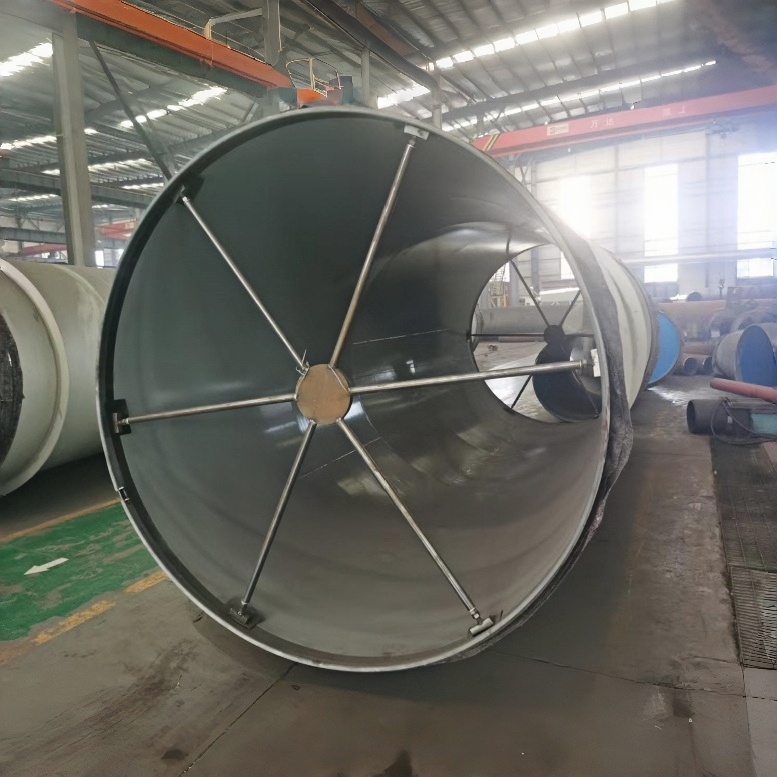
Selecting the proper API 5L pipe bends supplier is basically selecting a strong quality control system. PETROL STEEL has a ready stock of pipe bends from 8” to 100” in its warehouse, and custom-made pipe bends in all API 5L PSL1/PSL2 steel grades. Water transport, gas transmission, and municipal sewage projects: simply give us your operating parameters, and we will provide a technical proposal within 24 hours. Keep in mind, quality is crucial to EPC projects. Pipe bends need to be inspected extensively to ensure a long, trouble-free service life for a pipeline. PESCO is the choice for peace of mind.
Eva Wang
20+ Years of Global Steel Pipe Export Experience
Zero Customer Claim Record
Stock Available for Fast Delivery
Professional QC & Technical Support
ALL AVAILABLE IN PESCO
SELECT PESCO, YOU WILL BE RIGHT
For more info and the price of high-quality API 5L Pipeline Bends and their specifications, please send us an inquiry; you will get a quick reply soon.
https://www.petrolsteel.com/Contact-us.html
Tel/Fax: +86 10 8599 9168
Cell/WhatsApp/WeChat: 0086 159 0035 7871
Email: sales@petrolsteel.com, jackywinn@foxmail.com


Related News