Espanol Francais Russian Arabic Portugues
English | Chinese

+86 10 8599 9168 sales@petrolsteel.com

PETROL STEEL CO., LTD
  • Home
  • Products
    • Pipe Tube Hose
      • Large Diameter Steel Pipe
      • CRA CLAD Pipe
      • Explosion Welding Pipe
      • 316 stainless steel liquid cooling tubing
      • stainless steel pipe
      • Seamless Steel Pipe
      • Alloy Steel Pipe
      • Corten Steel Tubes for Air Heaters & Economizers | Manufacturer | PETROL STEEL
      • SCM440 Steel 42CrMo4 Alloy
      • LSAW Steel Pipe
      • SSAW Steel Pipe Bell Spigot
      • ERW Steel Pipe
      • Forged Steel Pipe
      • Galvanized Ground Screw Anchors
      • API 5CT Casing Tubing OCTG
      • Corrugated Stainless Steel Tubing ASME BPE A270
      • Incoloy Alloy MA956 ODS Steel
      • AMS 5659 15-5PH Stainless Steel Pipe AMS 5862
      • PTFE PFA FEP Flexible Hose Assemblies
      • Nuclear Pipe P280GH
    • Fittings, Flanges & Valves
      • Cladding Pipe Fittings
      • PESCO Clad Bends
      • PESCO Cladding Flanges
      • Stainless Steel Flanges
      • Stainless Steel Pipe Fittings
      • Ellipsoidal Head
      • Induction Bend Pipes
      • Carbon Steel Pipe Fittings Manufacturer & Supplier for Oil Gas, Petrochemical and EPC Projects | PETROL STEEL
      • DIN AISI JIS Bronze Sea Valves
      • PESCO JIS F7301 5K Marine Bronze Valve
      • C83600 C95800 DIN Marine Globe Valves
      • -196 Celsius degree Cryogenic Globe Valves
      • PESCO Sliding Wheel Control Valve
      • Forged Pipe Fitting
      • High Pressure Flange
      • High Pressure Pipe Fitting
      • Semiconductor Pressure Reducer
      • Conflat Vacuum Fitting Flange
      • bronze hose thru-hull fittings
      • Petrol Steel Steam Trap Spirax Sarco
      • Pipe Spools Manifolds Piping Bulk Materials
      • Aluminum Alloy Venne Perolo
      • Aluminum Brass SS Guillemin Coupling
      • P-LOC Hub Clamp Connector Manufacturer PETROL STEEL
      • ASME BPE A270 Biopharma Valves
      • Ultra High Pressure Needle Valves
      • Semiconductor Valve
    • Industrial Materials
      • Cobalt Chromium Molybdenum ASTM F75 / F799 Vacuum Melted CoCrMo Billet & Casting Ingot | PETROL STEEL
      • G.657.A2 Bend Insensitive Optical Fiber | FTTH & Data Center Single Mode Fiber | PETROL STEEL
      • Low-Loss G.652 Optical Fiber for Telecom Networks | PETROL STEEL High-Performance Fiber Optic Solutions
      • Large Copper Crucibles for Vacuum Melting Furnaces | Aerospace Metallurgy & Specialty Steel | PETROL STEEL
      • Molybdenum Tubes Manufacturer & Supplier for Semiconductor & Vacuum Furnace
      • TZM Molybdenum Piercing Plug Manufacturer and Exporter PETROL STEEL
      • PESCO forged 4140 axles
      • PESCO CFCC Carbon Fiber Composite Core Conductor ACFR ACCC
    • Equipment
      • Gauging Pig Propipe
      • Cavitation Jet Gauging Pig
  • Projects
  • News
    • Company News
    • Industry News
  • Contact us
  • About us
    • Quality Assurance
    • Group Organization
    • Concepts
    • Download

Industry News

  1. Home
  2. News
  3. Industry News
  4. G.657.A2 vs G.652.D Optical Fiber: Key D...

G.657.A2 vs G.652.D Optical Fiber: Key Differences for FTTH

G.657.A2 vs G.652.D Optic Fiber: Which is Better for FTTH Networks?


One of the most frequently asked questions during technical due diligence is what is the real difference between G.657.A2 and G.652.D fiber?

Can one be substituted for the other without disruption to an existing network? For network planners and fiber optic cable buyers assessing single-mode fiber for last-mile deployment, This is not a marketing distinction but a specification level decision that impacts splicing loss, macrobending performance, equipment compatibility and long term maintenance cost. This article discusses the engineering differences between the two ITU-T standards and explains why G.657.A2 has become the preferred option for modern FTTH, MDU and indoor cabling projects.


The Two Standards Explained G.652.D is the conventional single-mode fiber standard defined by ITU-T Recommendation G.652, and it has been the backbone of long-haul and metro networks for decades.

It provides low attenuation and stable transmission performance over the entire wavelength range from 1310 nm to 1625 nm, but it has never been optimized for tight bends. ITU-T G.657 defines G.657.A2, which was designed specifically to overcome the bending limitations of G.652.D while remaining fully inside the G.652.D transmission envelope. From a practical standpoint, G.657.A2 is an evolution of G.652.D, not a competing fiber family, and that makes a huge difference in procurement decisions.


Differences in Core Performance: Bend Radius and Attenuation Loss

The main difference between two fibers is in the macrobending performance. G.652.D fiber has a typical minimum bend radius of about 30 mm to avoid measurable signal loss, making it difficult to route through compact junction boxes, tight corners in MDU risers, or small wall-mounted enclosures. G.657.A2 fiber, in contrast, is designed to survive a bend radius as tight as 7.5 mm with very low additional attenuation — typically less than 0.1 dB at 1550 nm for a single 10 mm radius loop. This is accomplished by a modified refractive index profile and trench-assisted or depressed-cladding design that confines light in the core more effectively even under mechanical stress. For installers in space-constrained environments—apartment risers, subscriber access points, or dense urban cabinets—this bend tolerance translates directly to fewer splice failures and lower rework costs.

Compatibility: Can you replace G.652.D with G.657.A2 in an existing network?

The technical answer is reassuring to buyers and most buying decisions come down to the question. The mode field diameter and cutoff wavelength of G.657.A2 fiber are in the same tolerance range as G.652.D which means the two fibers are fully compatible for fusion splicing, connectorization and optical performance across standard single mode transmission systems, including GPON, XG-PON and 10G-EPON. In the field, splicing G.657.A2 to G.652.D will typically result in splice loss numbers similar to splicing G.652.D to G.652.D, i.e. less than 0.05 dB with a well calibrated fusion splicer. Thus, network operators can introduce G.657.A2 into a network without replacing OLTs, ONTs, or existing distribution fiber. The fiber can be deployed selectively at bend-critical points—drop cables, indoor risers, and patch panels—while the outside plant backbone continues to use G.652.D without any transmission penalty.


This Is Important for FTTH and MDU Deployment

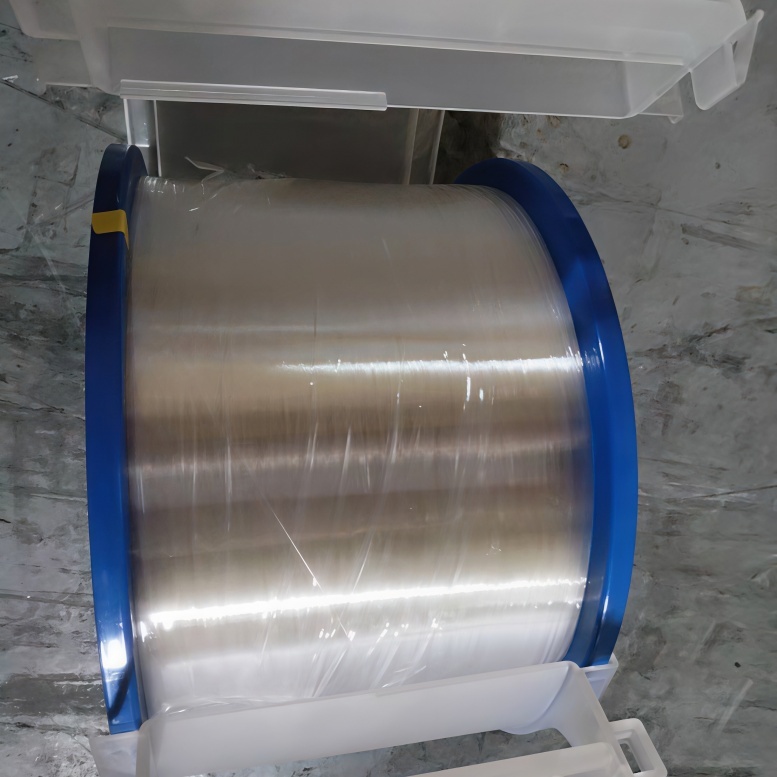
The reality of FTTH rollouts increasingly calls for fiber that can survive actual installation conditions, not just idealized, straight-line routing. In multi-dwelling unit (MDU) buildings, fiber often has to follow the door frames, conduit corners and floor risers where a 30 mm radius bend just can’t be achieved. This use of standard G.652.D in these locations carries the risk of increased insertion loss, intermittent signal degradation and costly truck rolls to troubleshoot. G.657.A2 has become the de facto standard for indoor drop cables, pre-connectorized jumpers and micro-duct installations in FTTH networks in Europe, the Middle East and Southeast Asia, precisely because of its low bend-loss characteristic. If you are a buyer sourcing fiber for these applications, take a close look at the bend insensitive optical fiber product line at G.657.A2 Bend-insensitive fiber, manufactured to meet the macrobending requirements of ITU-T G.657.A2 and fully backward compatible with existing G.652.D infrastructure.


Total Cost of Ownership: More than just the price per meter

Procurement teams often compare G.652.D and G.657.A2 on a unit price basis and ignore the difference in operational cost. The tighter installation geometry tolerances of G.657.A2 reduce the number of splice points needed in congested cabling paths, reduce the occurrence of bend-induced signal loss during quality inspection, and reduce installation time for technicians working in confined spaces. For network operators deploying large-scale MDU or Campus solutions, these efficiency gains usually outweigh the small price premium for G.657.A2 in the initial phase of roll out especially with the caveat of reduced returns for fault rectification. This is why more and more tier-one telecom operators are specifying G.657.A2 as the default fiber type for all indoor and drop-segment applications, and G.652.D for long-haul trunk routes where bend performance is not a limiting factor.

Making the Right Choice in Sourcing

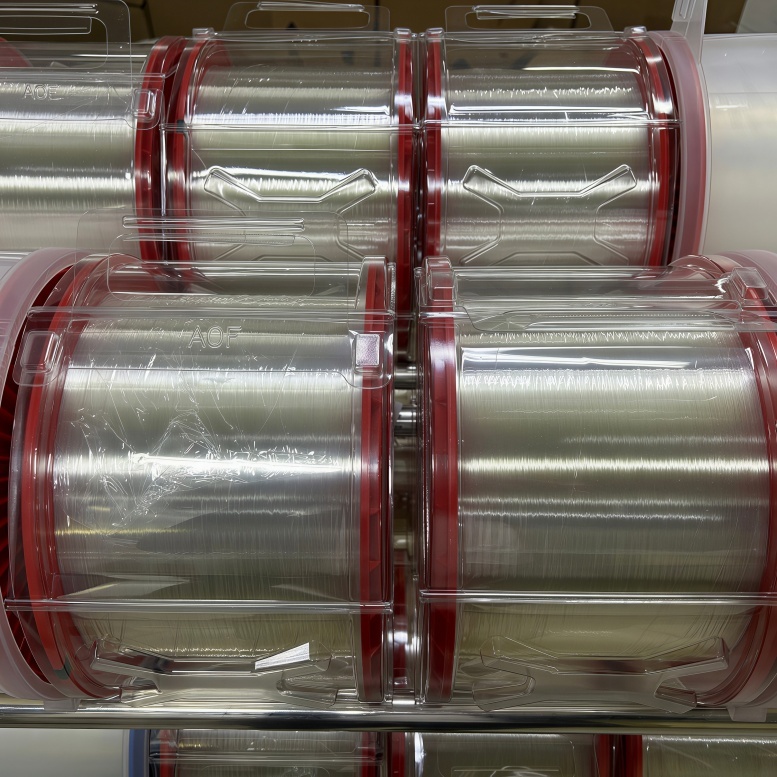
For buyers considering single-mode fiber suppliers, the conclusion is simple: G.657.A2 is not a replacement technology that will require a network redesign, but a drop-in upgrade path that maintains full transmission compatibility with G.652.D, while removing the bending constraints that lead to real-world installation failures. Before concluding a contract with a supplier, procurement teams should ask for macrobending test data at 1550nm and 1625nm, check mode field diameter tolerance, and confirm splice loss performance to G.652.D. Petrol Steel produces both types of fibre to full ITU-T compliance and can provide third party test reports on request. This service is designed to help network operators and system integrators who are in need of verified performance data for inclusion in tender documentation and technical evaluation. If your project requires bend tolerant fiber for FTTH, MDU or compact indoor cabling, our engineering team can review project specifications and recommend the right fiber configuration for your installation environment and transmission distance.

https://www.petrolsteel.com/Contact-us.html
Tel/Fax: +86 10 8599 9168
Cell/WhatsApp/ Wechat: 0086 159 0035 7871
Email: sales@petrolsteel.com, jackywinn@foxmail.com

For more infor of products, please check:
https://www.petrolsteel.com/g657-a2-bend-insensitive-optical-fiber-p.html


Related News

Alloy 625 CRA Clad Pipe for H₂S and CO₂ Corrosion Environments

Alloy 625 CRA Clad Pipe for H₂S and CO₂ Corrosion Environmen

Top 5 Factors EPC Buyers Consider When Sourcing CRA Clad Pipe

Top 5 Factors EPC Buyers Consider When Sourcing CRA Clad Pip

Technical contents on the production, processing, assembly and application of 4140 material axles

Technical contents on the production, processing, assembly a

EN 10219 S355J0H Steel Pipe Specifications

EN 10219 S355J0H Steel Pipe Specifications

Corrosion-Resistant Alloy Clad Pipe Solutions for Refinery and Petrochemical Plants

Corrosion-Resistant Alloy Clad Pipe Solutions for Refinery a

Longitudinal Submerged Arc Welding LSAW Steel Pipes Processes

Longitudinal Submerged Arc Welding LSAW Steel Pipes Processe

Product Categories

  • Pipe Tube Hose
    • Large Diameter Steel Pipe
    • CRA CLAD Pipe
    • Explosion Welding Pipe
    • 316 stainless steel liquid cooling tubing
    • stainless steel pipe
    • Seamless Steel Pipe
    • Alloy Steel Pipe
    • Corten Steel Tubes for Air Heaters & Economizers | Manufacturer | PETROL STEEL
    • SCM440 Steel 42CrMo4 Alloy
    • LSAW Steel Pipe
    • SSAW Steel Pipe Bell Spigot
    • ERW Steel Pipe
    • Forged Steel Pipe
    • Galvanized Ground Screw Anchors
    • API 5CT Casing Tubing OCTG
    • Corrugated Stainless Steel Tubing ASME BPE A270
    • Incoloy Alloy MA956 ODS Steel
    • AMS 5659 15-5PH Stainless Steel Pipe AMS 5862
    • PTFE PFA FEP Flexible Hose Assemblies
    • Nuclear Pipe P280GH
  • Fittings, Flanges & Valves
    • Cladding Pipe Fittings
    • PESCO Clad Bends
    • PESCO Cladding Flanges
    • Stainless Steel Flanges
    • Stainless Steel Pipe Fittings
    • Ellipsoidal Head
    • Induction Bend Pipes
    • Carbon Steel Pipe Fittings Manufacturer & Supplier for Oil Gas, Petrochemical and EPC Projects | PETROL STEEL
    • DIN AISI JIS Bronze Sea Valves
    • PESCO JIS F7301 5K Marine Bronze Valve
    • C83600 C95800 DIN Marine Globe Valves
    • -196 Celsius degree Cryogenic Globe Valves
    • PESCO Sliding Wheel Control Valve
    • Forged Pipe Fitting
    • High Pressure Flange
    • High Pressure Pipe Fitting
    • Semiconductor Pressure Reducer
    • Conflat Vacuum Fitting Flange
    • bronze hose thru-hull fittings
    • Petrol Steel Steam Trap Spirax Sarco
    • Pipe Spools Manifolds Piping Bulk Materials
    • Aluminum Alloy Venne Perolo
    • Aluminum Brass SS Guillemin Coupling
    • P-LOC Hub Clamp Connector Manufacturer PETROL STEEL
    • ASME BPE A270 Biopharma Valves
    • Ultra High Pressure Needle Valves
    • Semiconductor Valve
  • Industrial Materials
    • Cobalt Chromium Molybdenum ASTM F75 / F799 Vacuum Melted CoCrMo Billet & Casting Ingot | PETROL STEEL
    • G.657.A2 Bend Insensitive Optical Fiber | FTTH & Data Center Single Mode Fiber | PETROL STEEL
    • Low-Loss G.652 Optical Fiber for Telecom Networks | PETROL STEEL High-Performance Fiber Optic Solutions
    • Large Copper Crucibles for Vacuum Melting Furnaces | Aerospace Metallurgy & Specialty Steel | PETROL STEEL
    • Molybdenum Tubes Manufacturer & Supplier for Semiconductor & Vacuum Furnace
    • TZM Molybdenum Piercing Plug Manufacturer and Exporter PETROL STEEL
    • PESCO forged 4140 axles
    • PESCO CFCC Carbon Fiber Composite Core Conductor ACFR ACCC
  • Equipment
    • Gauging Pig Propipe
    • Cavitation Jet Gauging Pig

Links

Hs CodeGoogleWikimediaBaidu

内页左侧广告1

LatestPost

  • What are the differences between brass v
    2022-04-30
  • The types and characteristics of Marine
    2022-03-09
  • ASME BPE Tubing Hygienic UHP materials a
    2020-08-06

Feedback

Contact Us

1404979930

+86 159 0035 7871

+86 10 8599 9168

sales@petrolsteel.com

petrolsteels

A-4F, Vantone Center, A6, Chaowai St., Chaoyang Dist., Beijing, China.

MOBILE WEBSITE

Copyright © 2014 PETROL STEEL CO., LTD All Rights Reserved.

  • Skype.
  • E-mail
  • Whatsapp
  • Inquiry
Inquiry Us Now !
Inquiry Us Now !